pilot project, 2026
in collaboration with Urbana
This pilot project developed within GreenInCities, a Horizon Europe research programme exploring new approaches to the regeneration of urban green spaces. Earlier community workshops around the case-study park in Athens revealed that teenage girls were among the groups least represented both physically in the park and rarely considered in planning processes. This project set out to explore how participatory design could make urban parks more welcoming, inclusive and relevant for girls. Over the course of eight workshops that spanned four months, we worked closely together with a group of first-year high school girls. The project invited them to imagine themselves as active users and designers of public space. The main goal was to design a structure for their neighborhood park that responds to their needs and ideas; and our workshops spanned from co-analysis and co-design, to participatory design and co-construction. Through mapping, urban exploration and documentation, model making, real-scale prototyping and hands-on construction, they reflected on their experience of public space and eventually constructed their own structure. Beyond the final structures, the project aimed to foster a sense of agency by introducing architectural tools for understanding and shaping the city. Rather designing for teenage girls, the process was centred on designing with them; collaborating with them as experts on their everyday experiences, and demonstrating how their creativity can lead to more inclusive forms of publicness. The resulting interventions translate their shared priorities for comfort, flexibility, social interactions and playfulness, into a series of adaptable objects designed by girls, with girls, for girls.
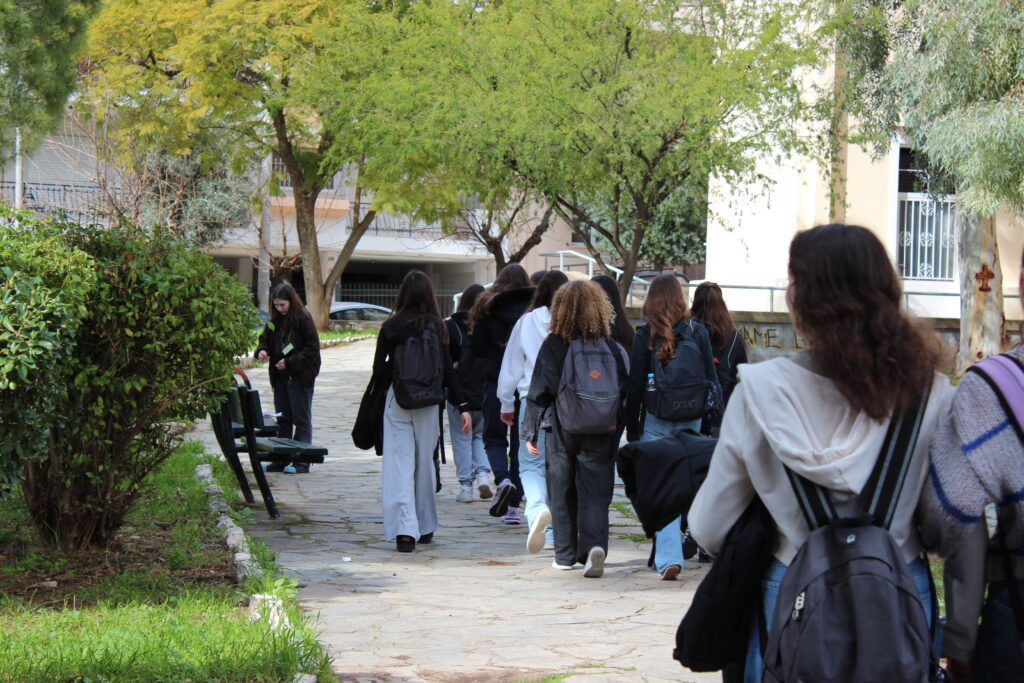
co-analysis and co-design
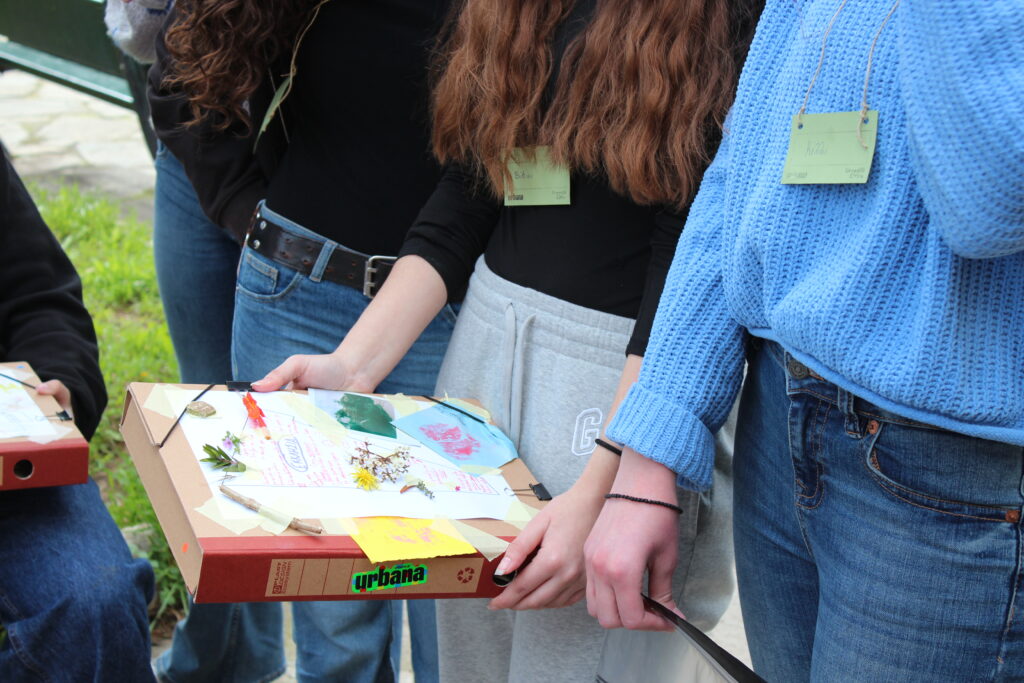
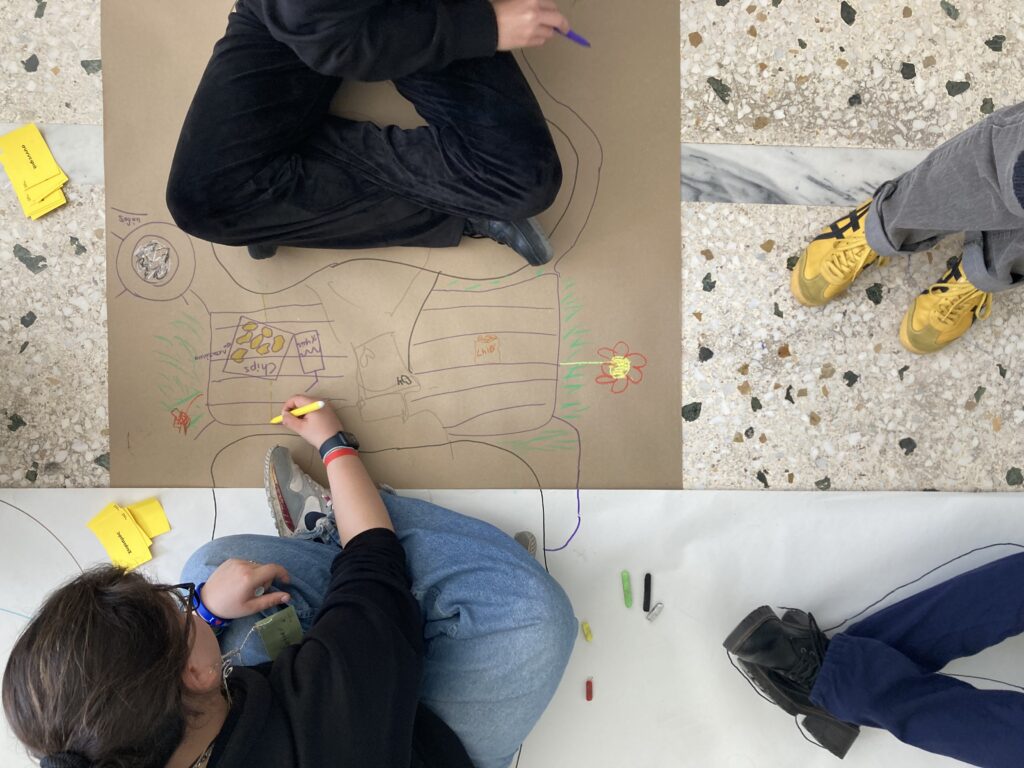
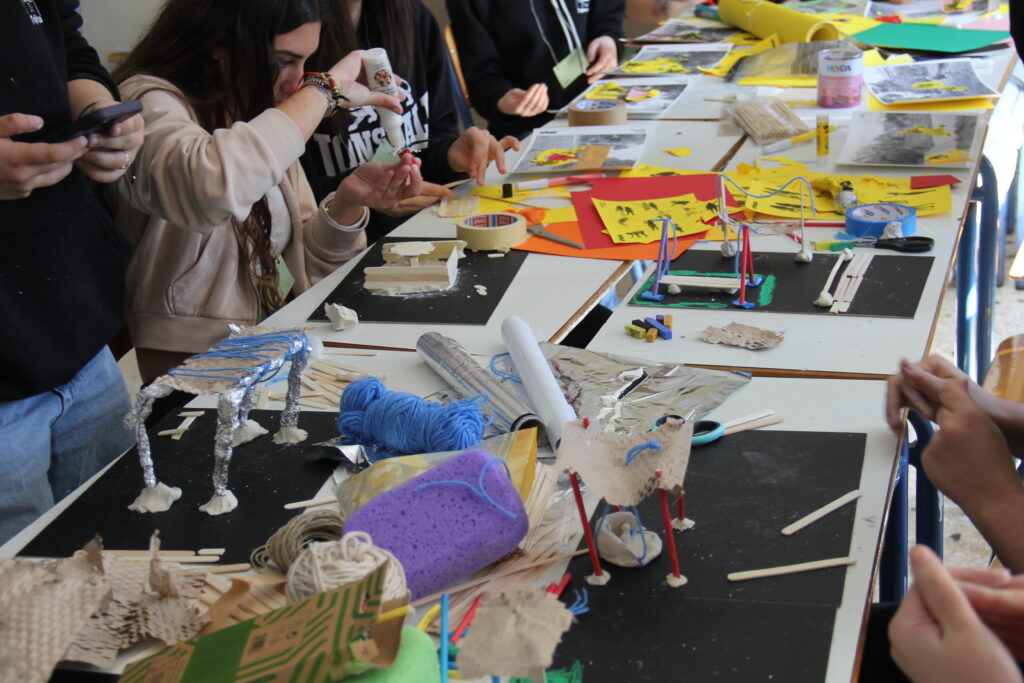
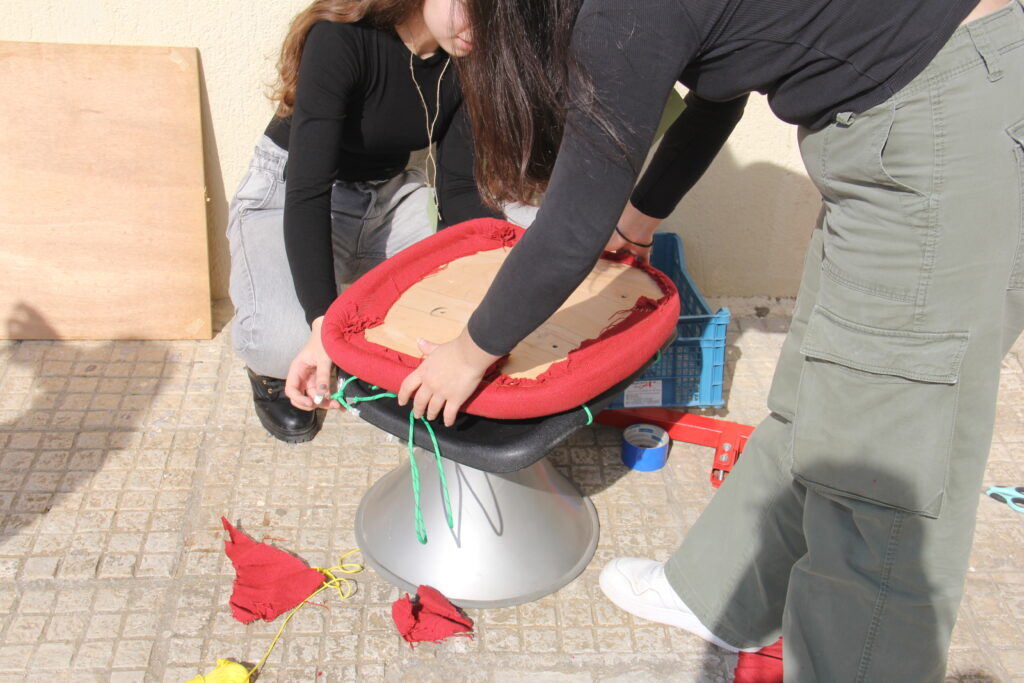
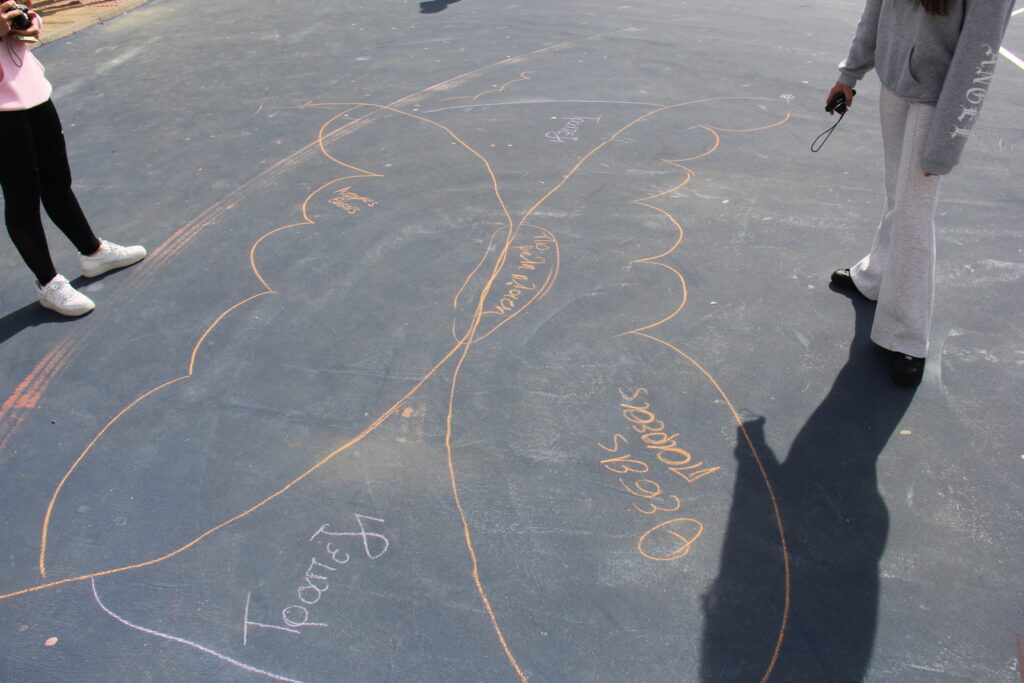
The first four workshops focused on understanding how the girls experienced parks and imagining how these spaces could better support them. They engaged with sharing exercises, mapping, exploration, photography, body-tracing, making collages and models. An unexpected discovery of discarded furniture and materials in the school’s storage allowed the girls to explore prototype-making in real-scale. Common themes and needs emerged: places to relax, socialise and spend time together. As the process unfolded, their ideas became increasingly more personal and spatial, especially through the prototypes, revealing that listening to girls generates design priorities that are often absent from conventional park design.
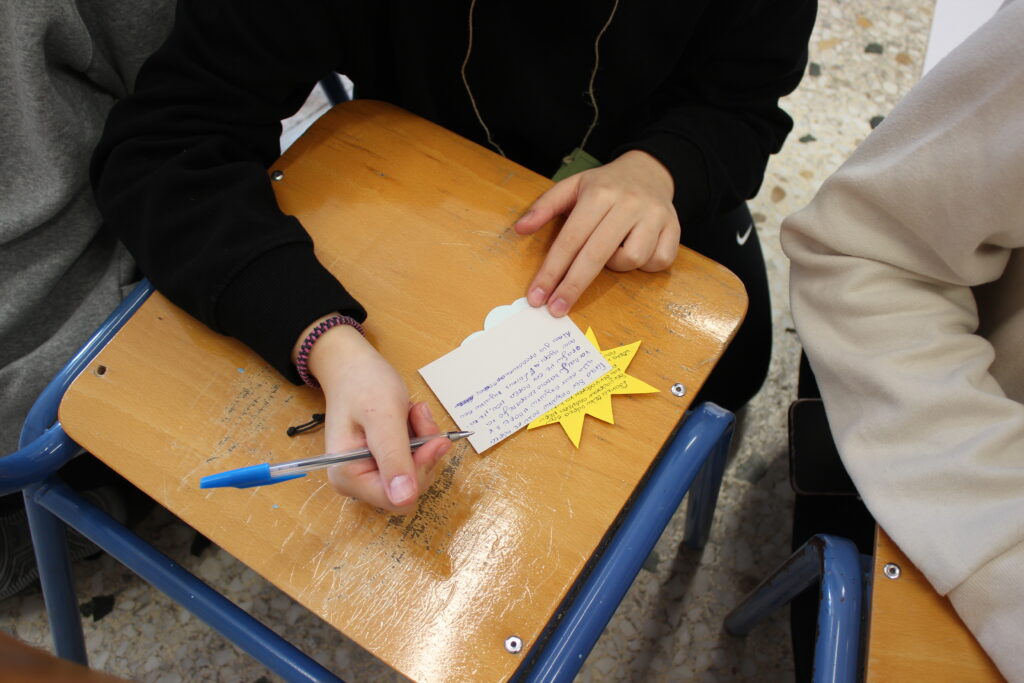
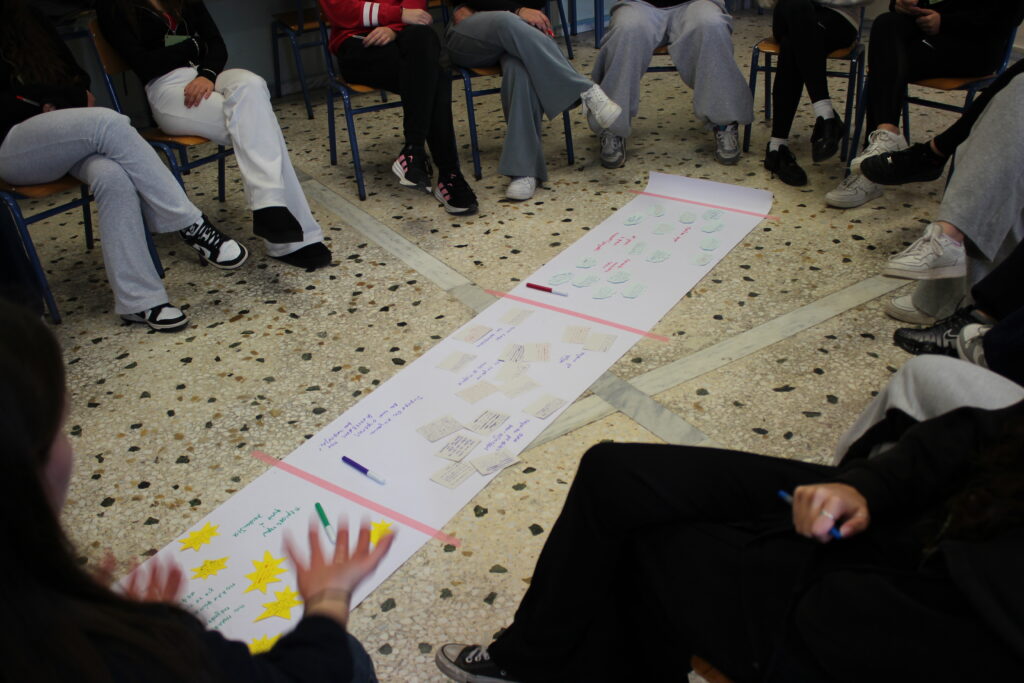
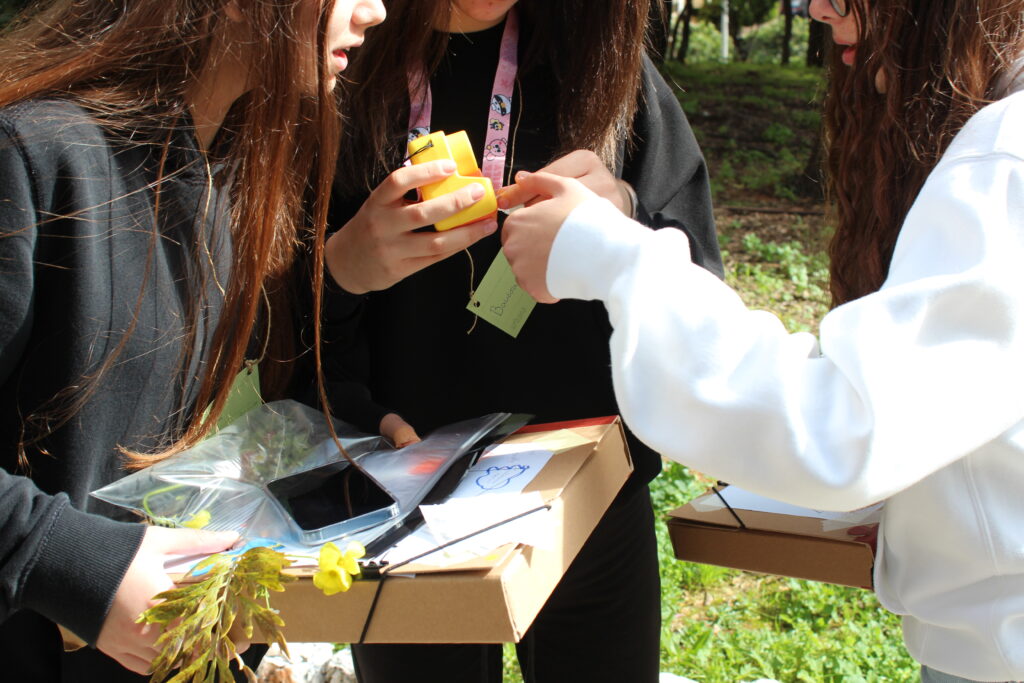
participatory design
The ideas developed during the workshops were organised and distilled into design elements, themes and needs; slowly synthesised into a participatory design process that balanced the girls’ proposals with practical considerations such as construction, flexibility and material reuse. Through iterative testing, co-validation and design exercises the common needs were associated with forms: flexible seating, shade and gathering spaces, circular formations. This evolved into a lightweight, adaptable design that remained open to further interpretation during the co-construction phase.

co-construction
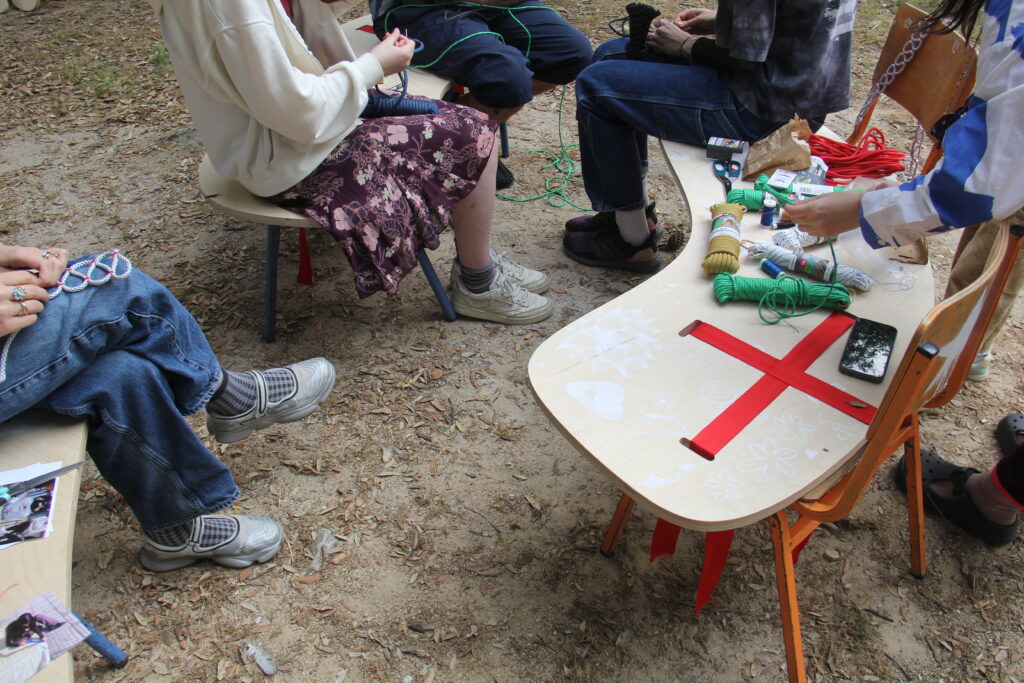
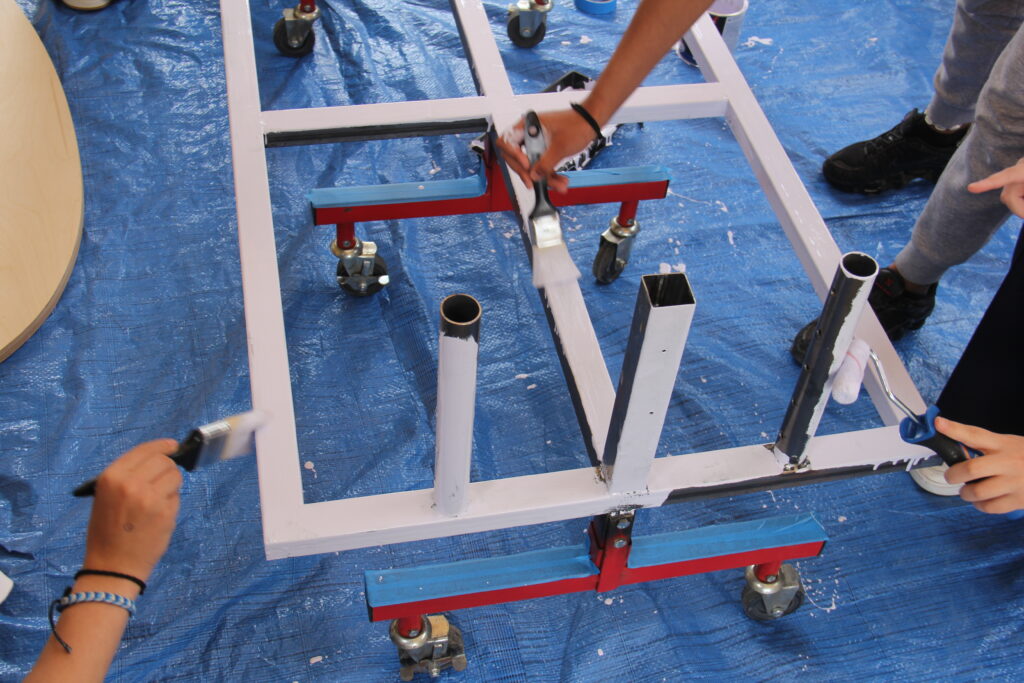
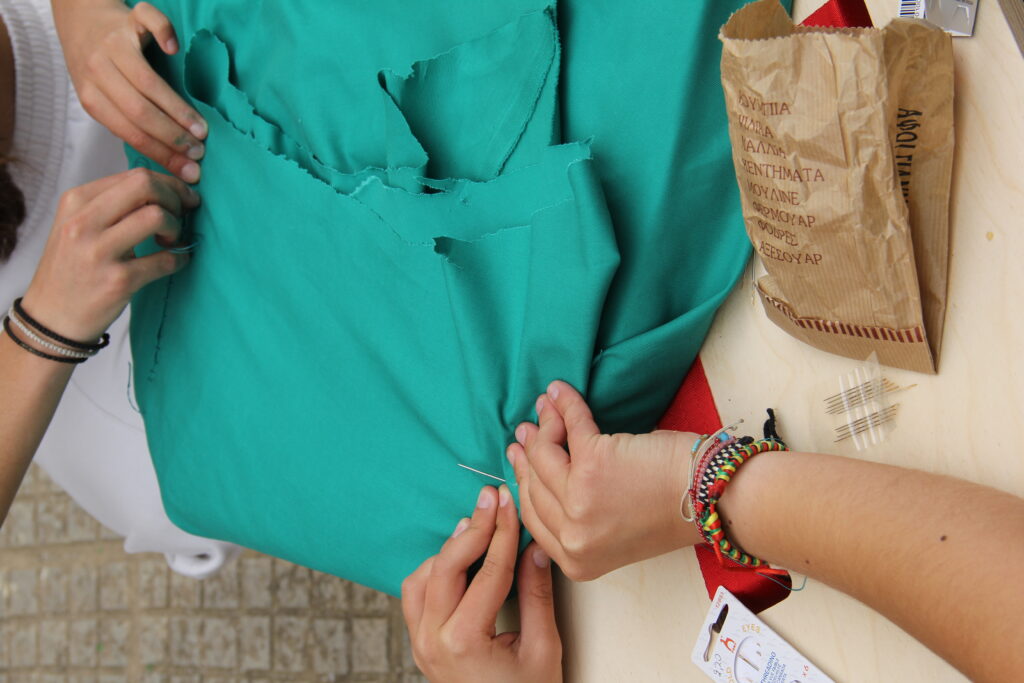
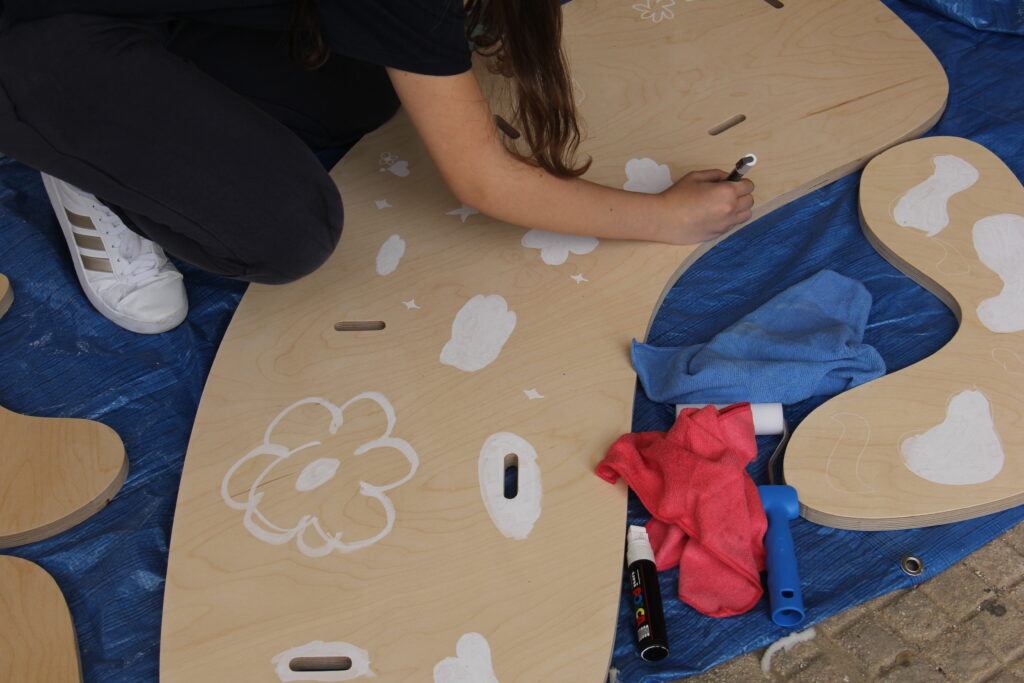
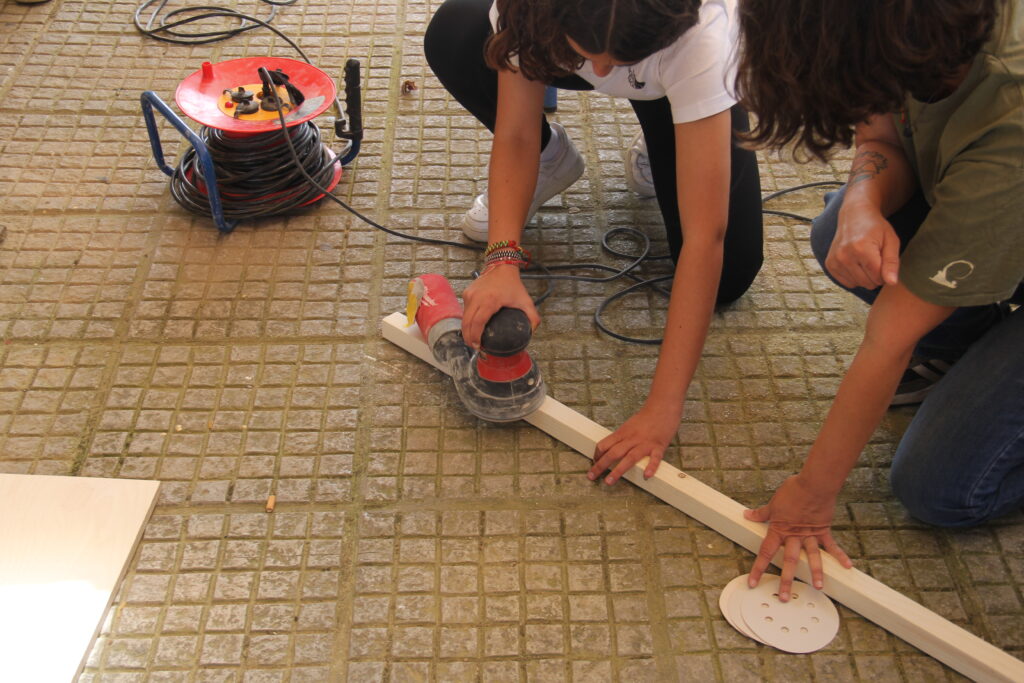
Spanning three days, the final workshops transformed the design into reality through a collaborative construction process, where the girls assembled, painted, modified and personalised the structures alongside us. Rather than following rigid instructions, the workshops encouraged experimentation, allowing participants to choose tasks, move between activities and influence the outcome as construction unfolded. Working at full scale proved to be the most engaging stage of the project, strengthening the girls’ confidence, sense of ownership and agency while demonstrating how hands-on making can become a powerful tool for participation in public space.
designed by girls, for girls
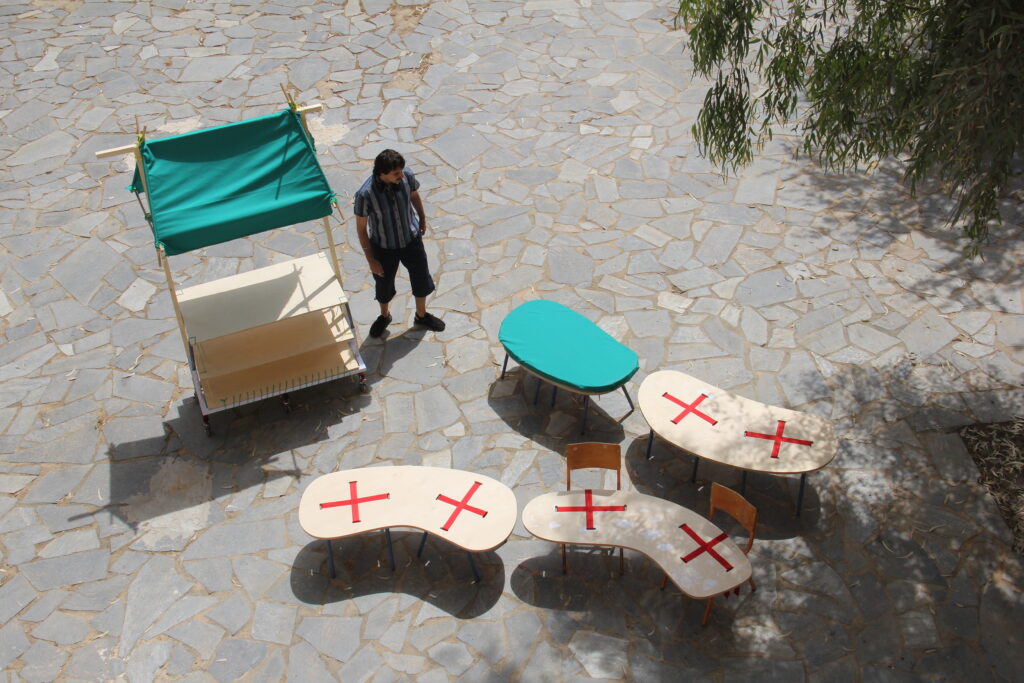
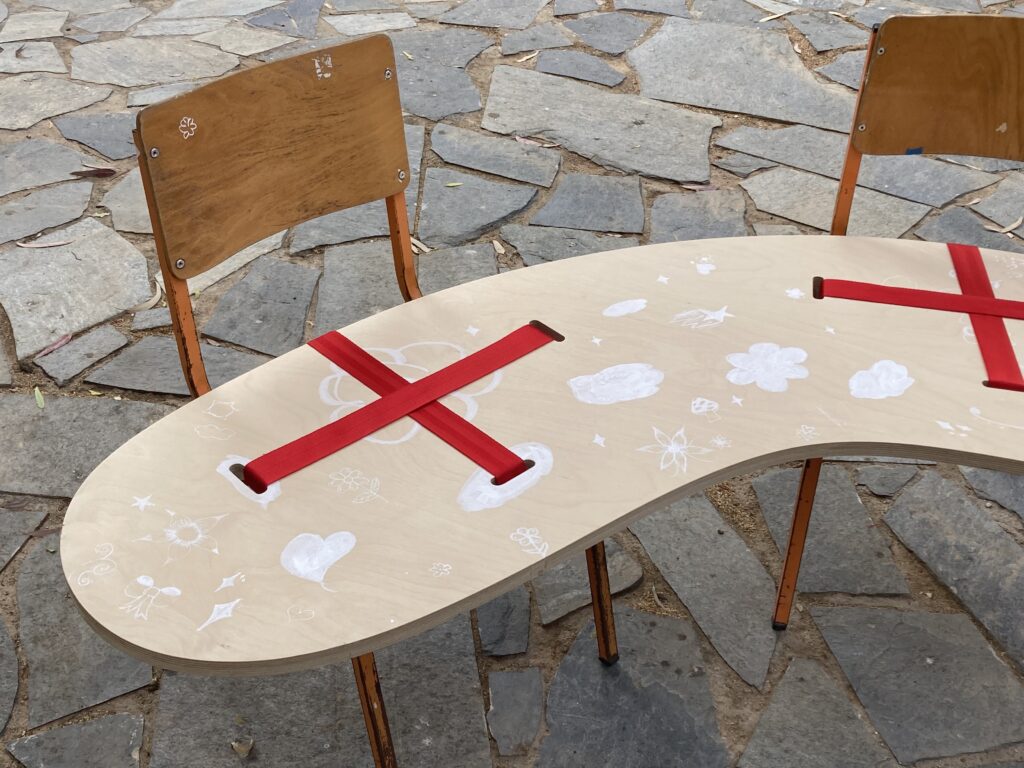
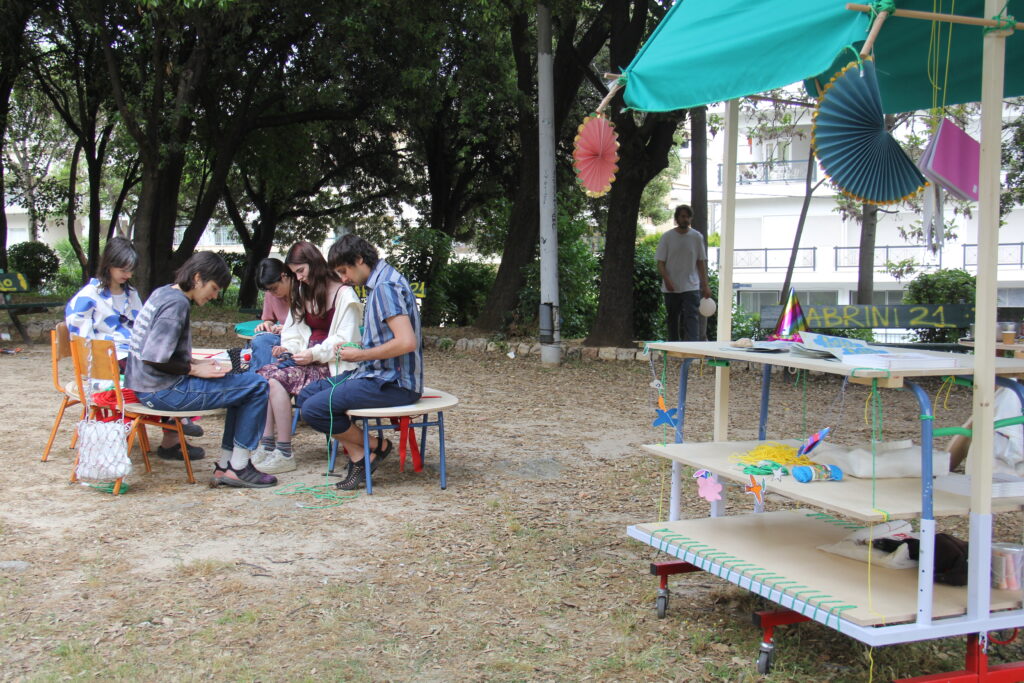
The pilot project concluded with a public celebration in the neighborhood park, where the girls installed and tested the structures they had helped shape throughout the process. The final intervention consists of a series of lightweight, movable seating elements made from reclaimed school chairs and plywood, together with a multifunctional trolley that serves as storage, transport and a gathering point. Designed to be rearranged, shared and appropriated in different ways, the objects invite girls to occupy the park on their own terms while demonstrating how participatory design can produce spaces that are both playful and genuinely responsive to their users.