Graduation Thesis, 2024
TU Delft, Faculty of Architecture & the Built Environment
mentors: Rodrigo Cardoso & Leo van den Burg
In Greece, the prevailing growth-paradigm has been manifested in the commodification of rural areas through tourism, and the continuous neglect and abandonment of the non-touristic territories. This has resulted in their societal and environmental degradation, exemplified through the recent devastating floods and wildfires, that also stem from the pressures of climate change. Within a context of intense political corruption and tardy governmental response, the nuanced topic of rurality is failing to be addressed adequately. We cannot continue business-as-usual, but should aim instead towards transitioning to a post-growth society. However, there are significant barriers present, like the limited societal acceptance, lack of alternative spatial imaginaries and intense bureaucracy. To bypass such hurdles, bioregionalism proposes the formation of a place-based administrative body — researched here through the case-study of the Spercheios river basin. Considering the overwhelming and ambitious nature of the post-growth agenda, in combination with the lack of adequate communication tools to engage disinterested stakeholders that are locked-in-growth, traditional planning approaches would not suffice. Alternatively, after the exploration of the site-specific conditions and a tracing of growth in the landscape itself, a contextual spatial imaginary is formed, conducted through a combination of fiction writing, speculative design interventions and physical artefacts. This narrative is explored through the perspective of a rural dweller of the bioregion of Spercheios, who meanders along the region in the scope of one day. They explore the adaptation to energy and water sufficiency from the scale of one individual house, to the neighborhood, to the village, and reckon with food production through extensive agroforestry practices. They engage with bioregional decision-making processes in a weekly meeting, and observe nature-based solutions along the river as they commute towards the coast. There, they explore the restoration of the wetlands and the adaptation towards living with more water in the lowlands. Finally, they end their day back at the square of the village, reflecting, sharing stories and bonding with others. Through this narrative, implications, opportunities and limitations of the post-growth approach are investigated, while also exploring experimental methods of communication and engagement — ultimately attempting to imagine the post-growth future as tangible, within grasp.
You can read the whole thesis here.
Another Rural was shortlisted for the 2025 BK Archiprix awards.
The post-growth approach challenges the dominant notion of an ever-expanding economy detached from planetary boundaries. Post-growth envisions a “voluntary, democratically negotiated and equitable reduction of the material throughput of our societies until we reach a sustainable steady state” (Büchs and Koch, 2019, p.155). The transition towards a post-growth society requires a counter-model of spatial planning, a deep ecocentrism, and place-based, actionable plans. To overcome the many social, political, institutional, and spatial barriers, Another Rural explores synergies with bioregionalism. This proposes a new model of bioregional governance, strengthens the relationship between communities and place, and generates spatial imaginaries rooted in local contexts, activating a cycle of visioning and action.
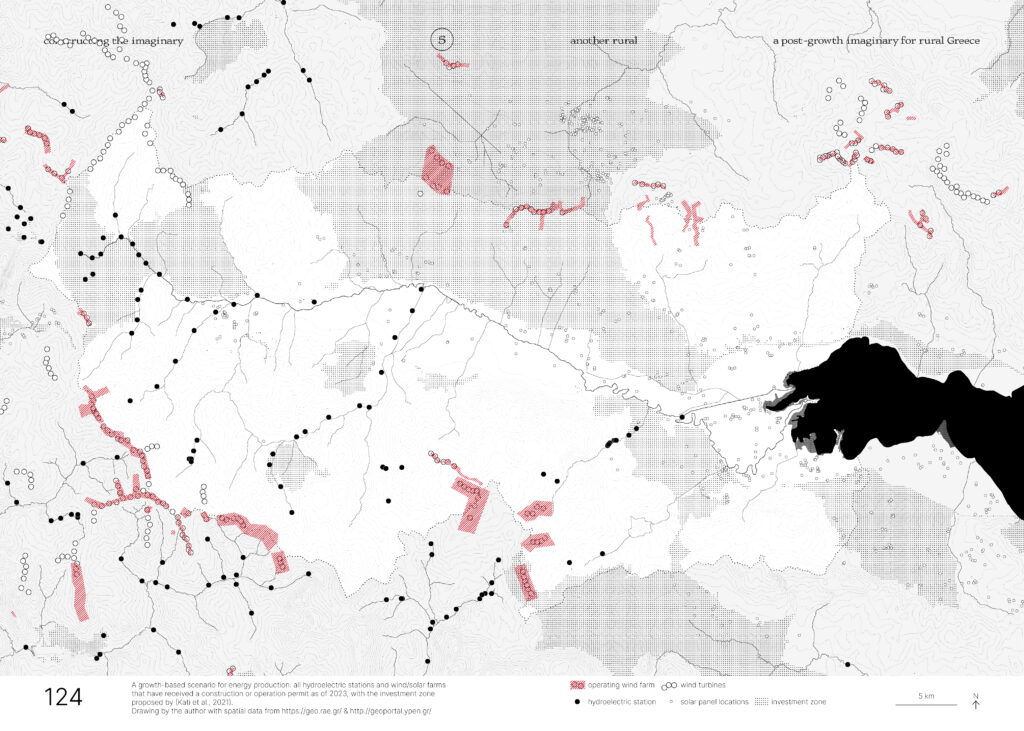
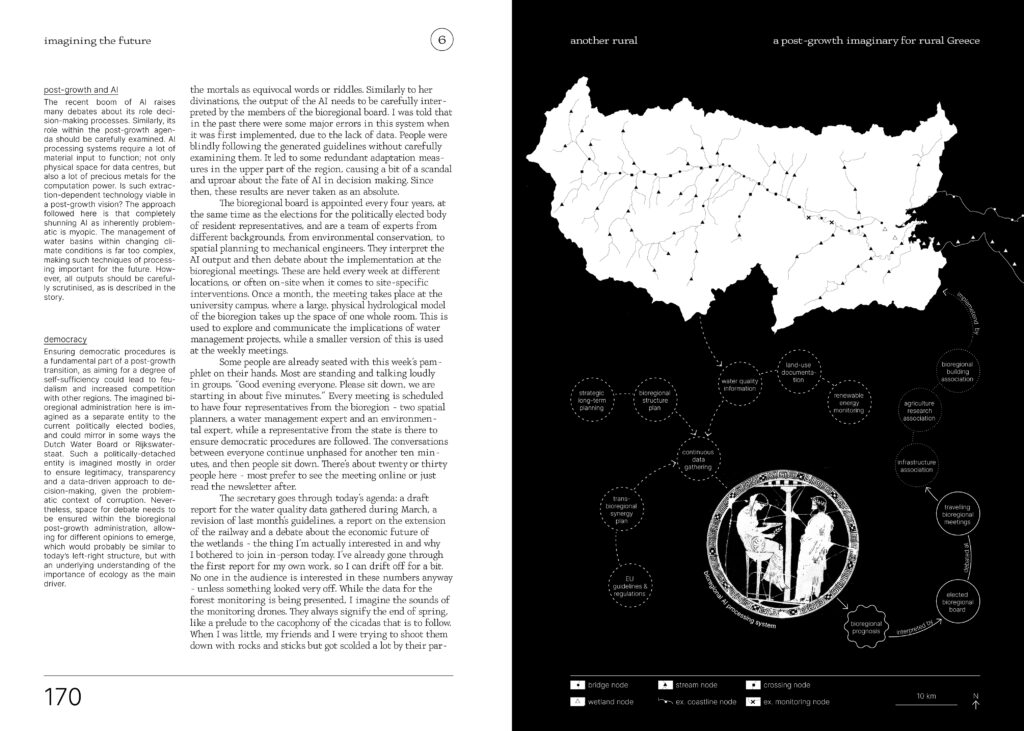
Bioregionalism “recognizes that we do not live only in cities, towns, villages or the countryside, we also live in watersheds, ecosystems and bioregions” (Wahl, 2018). It challenges anthropocentric ways of understanding and managing land — an especially pressing issue in mainland Greece, where municipalities are defined by population criteria and fail to manage resources effectively, and regions struggle to oversee vast territories. Considering urgent water management challenges, this thesis examines a bioregional governance approach based on river basins as units of management. From these, the Spercheios river bioregion is chosen as a case study.
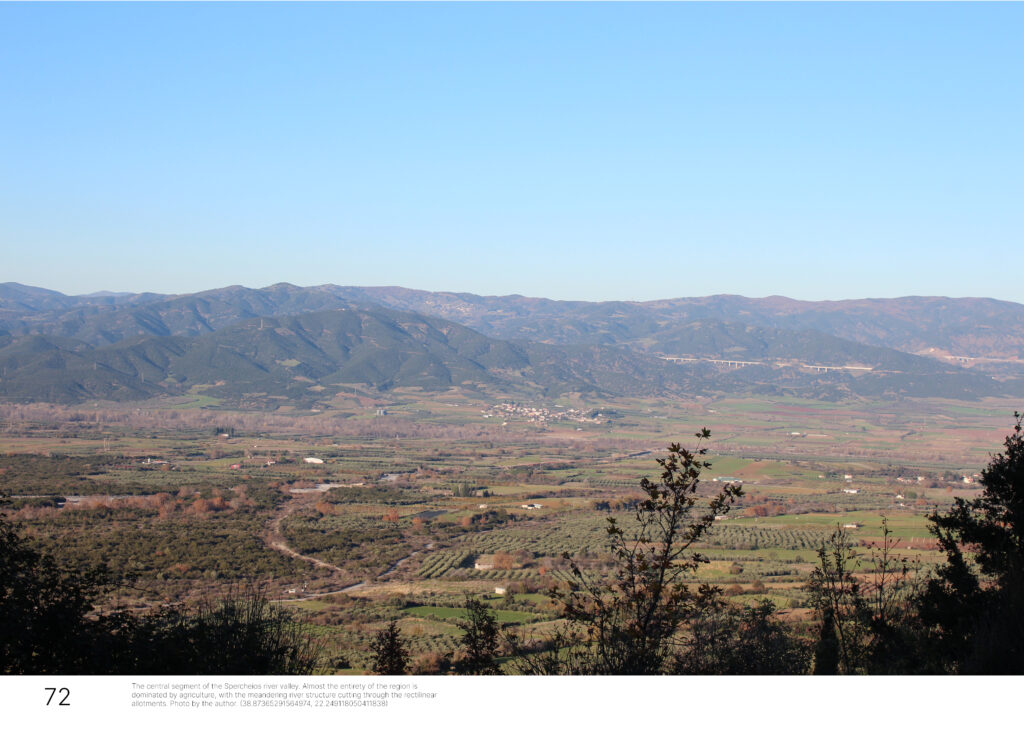
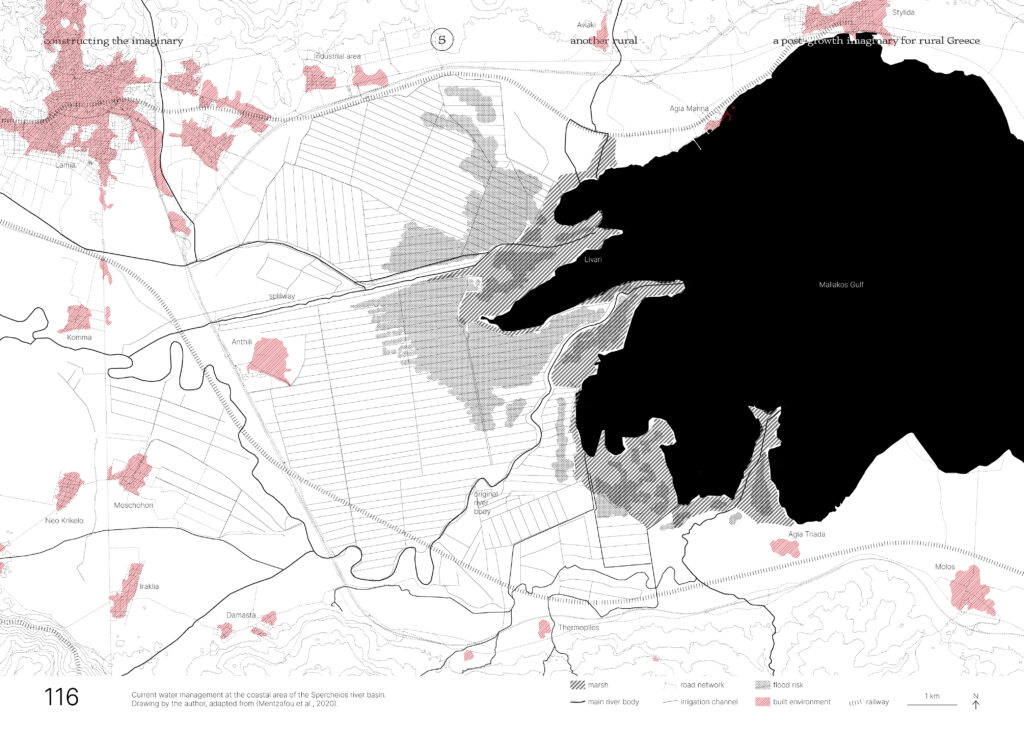
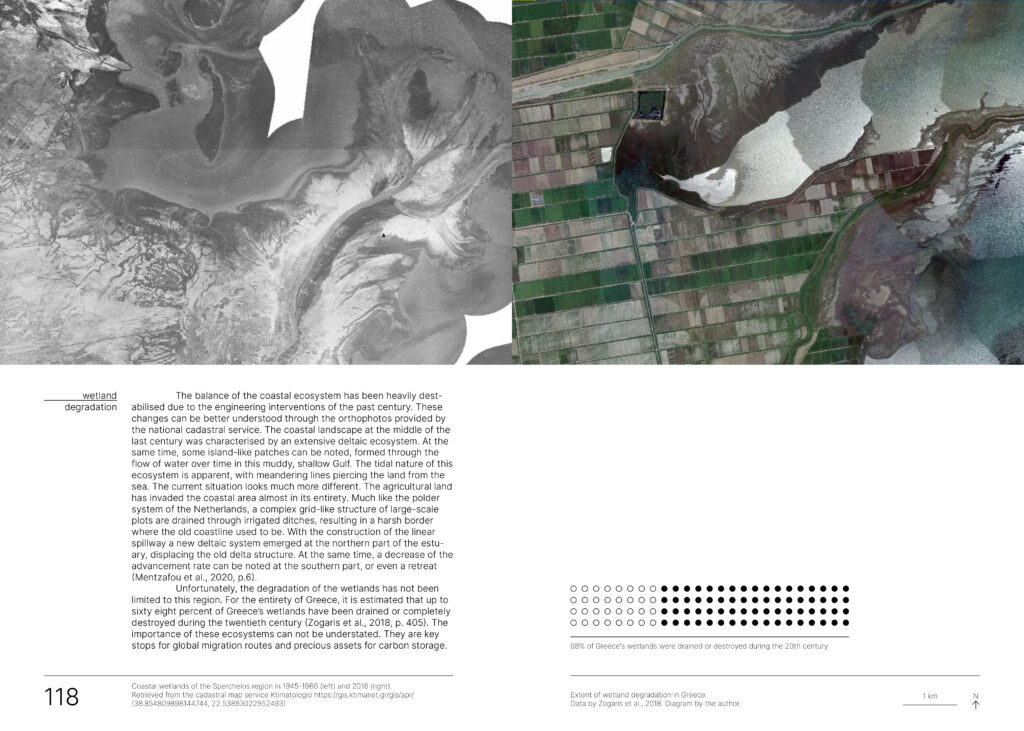
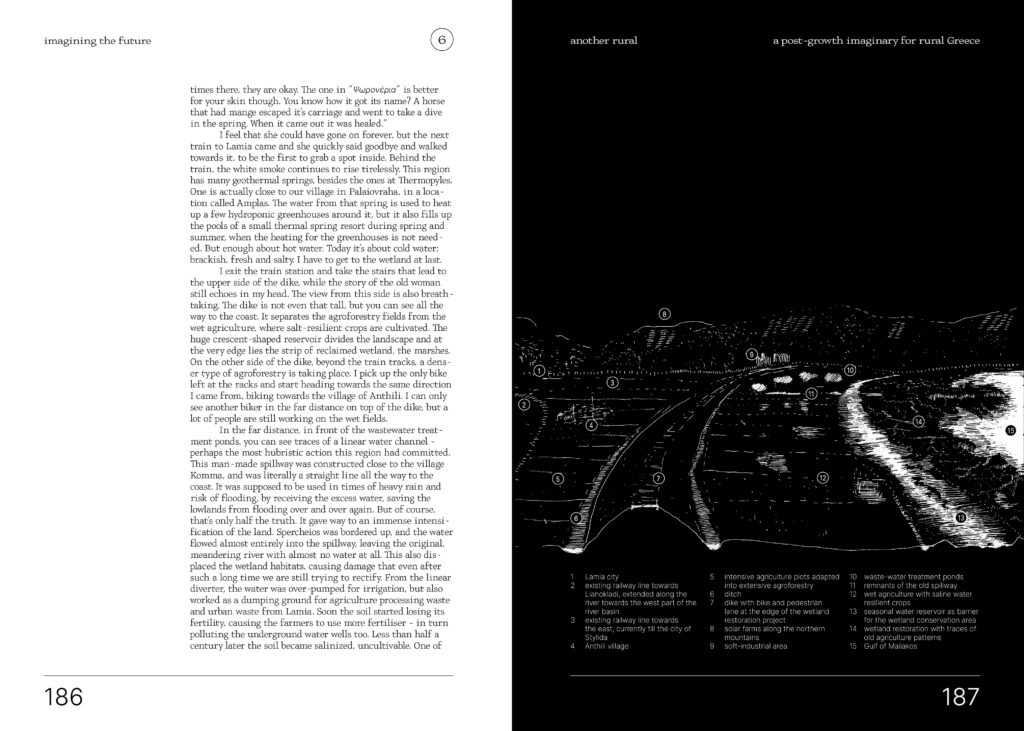
The Spercheios bioregion is located in Central Greece and is predominantly rural, currently administered by the municipalities of Lamia and Makrakomi. Geomorphologically, it is a valley between the mountains Oiti, Tymfristos, and Othrys, with numerous streams feeding into the Spercheios river, which flows into the Maliakos Gulf. The area faces complex issues: population decline and ageing, frequent destructive floods, and the gradual abandonment of agriculture. Although cultivated for millennia, it is only in the modern era of growth that human activity has disrupted the natural environment so severely. Agricultural intensification has caused extensive deforestation, erosion of traditional knowledge, and the loss of land management practices. Here, a different way of living and managing the land is envisioned — one where immediate financial profit is not the priority, but long-term ecological and social well-being.
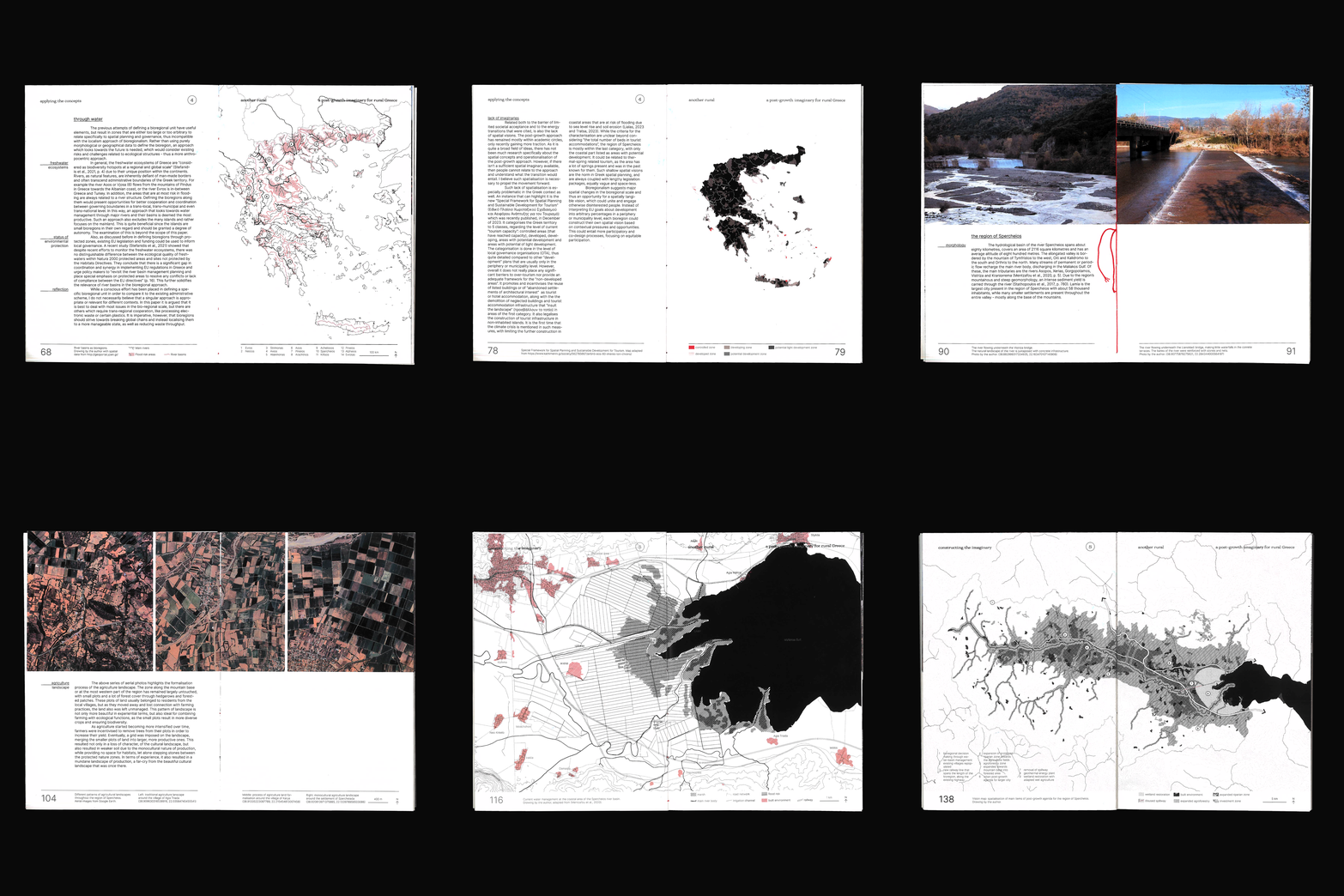
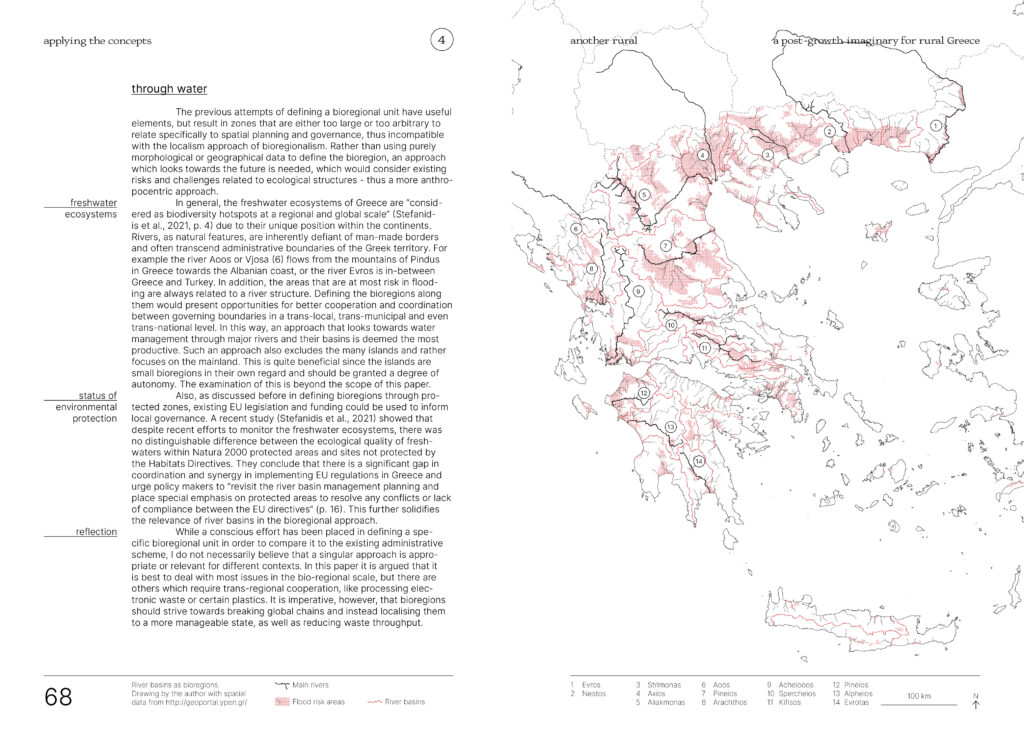
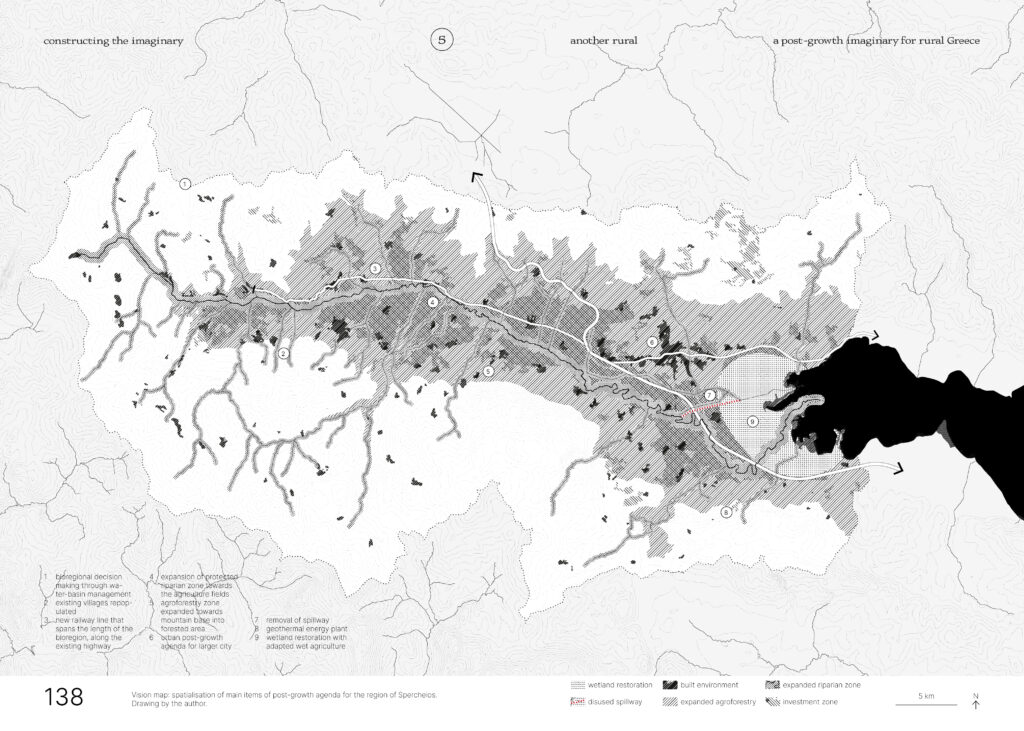
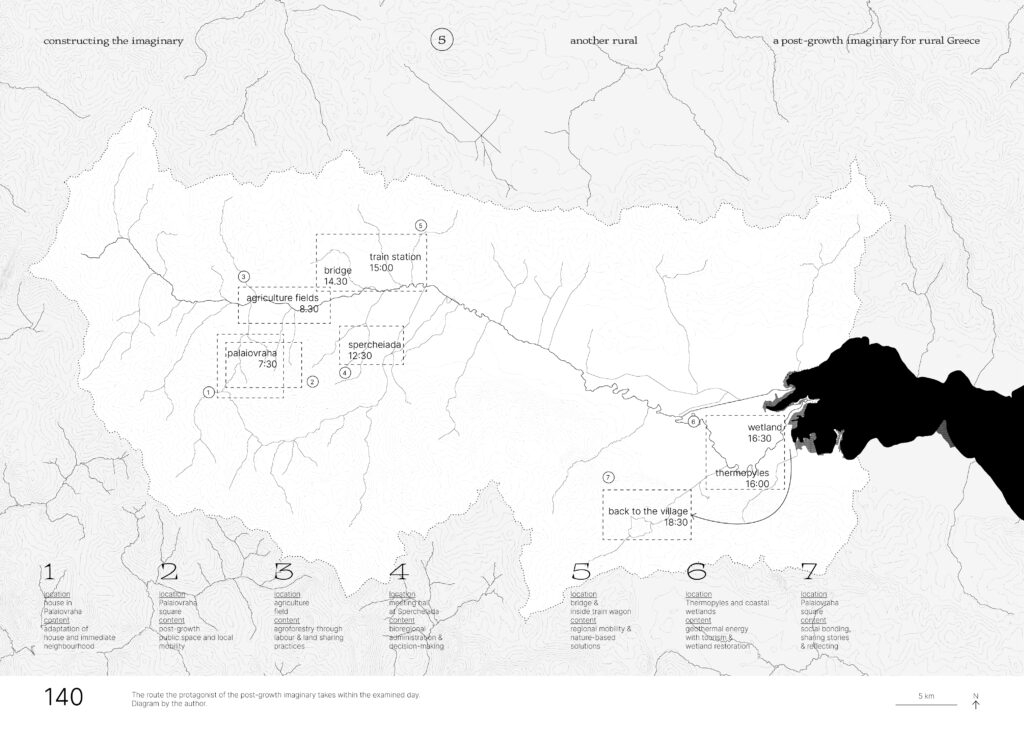
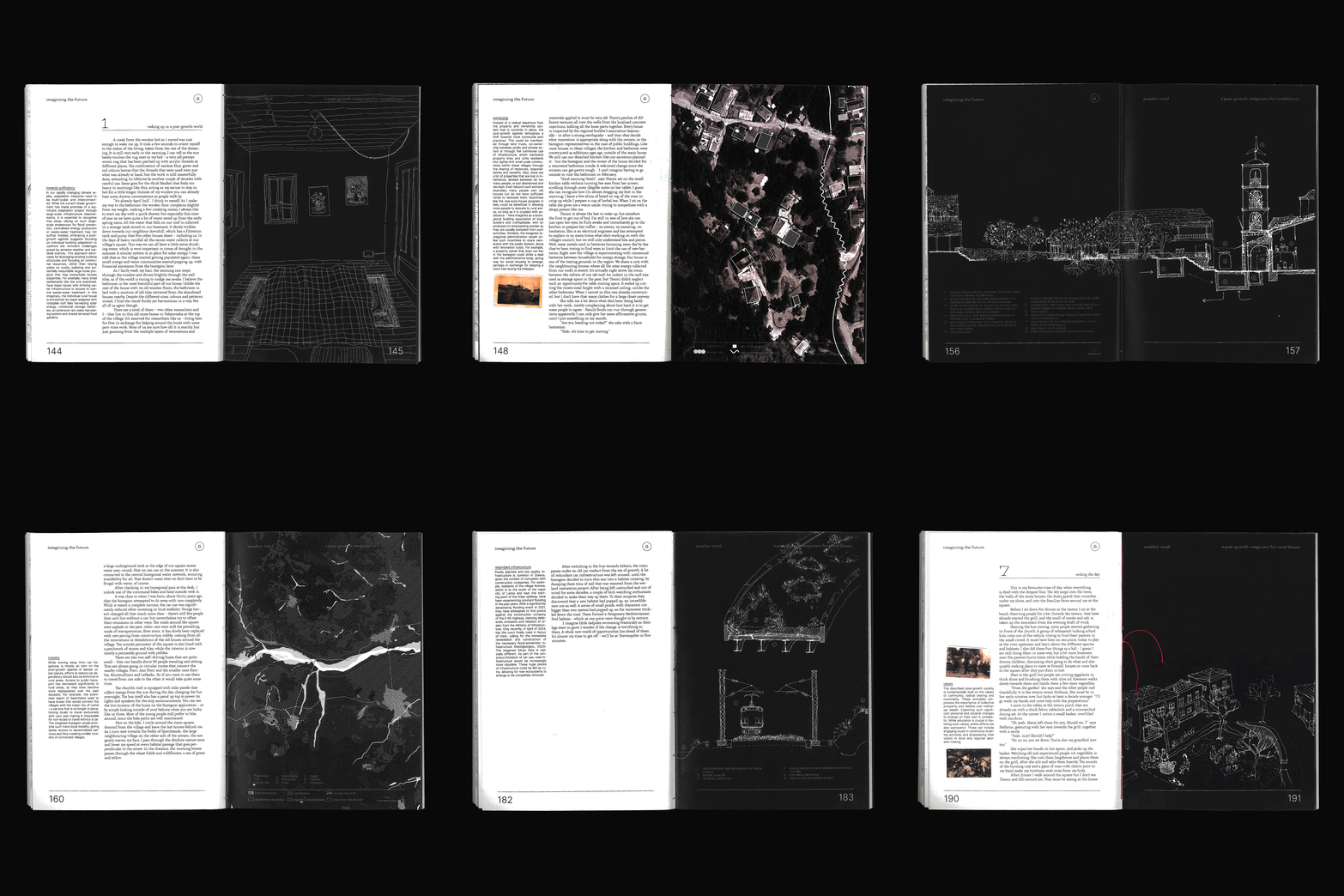
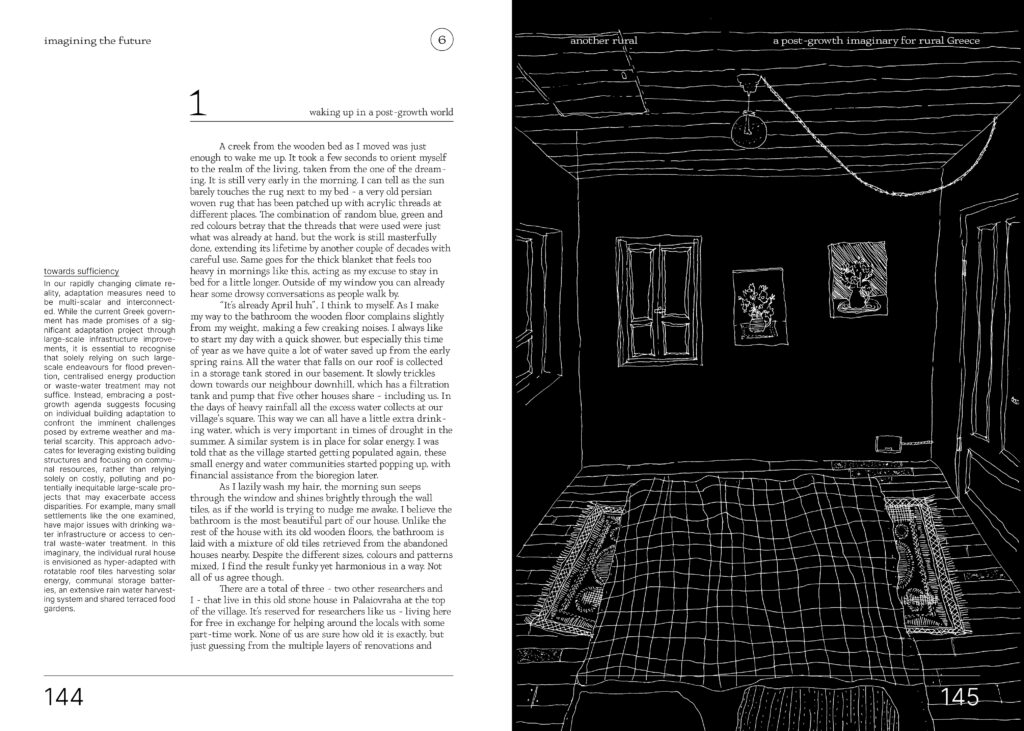
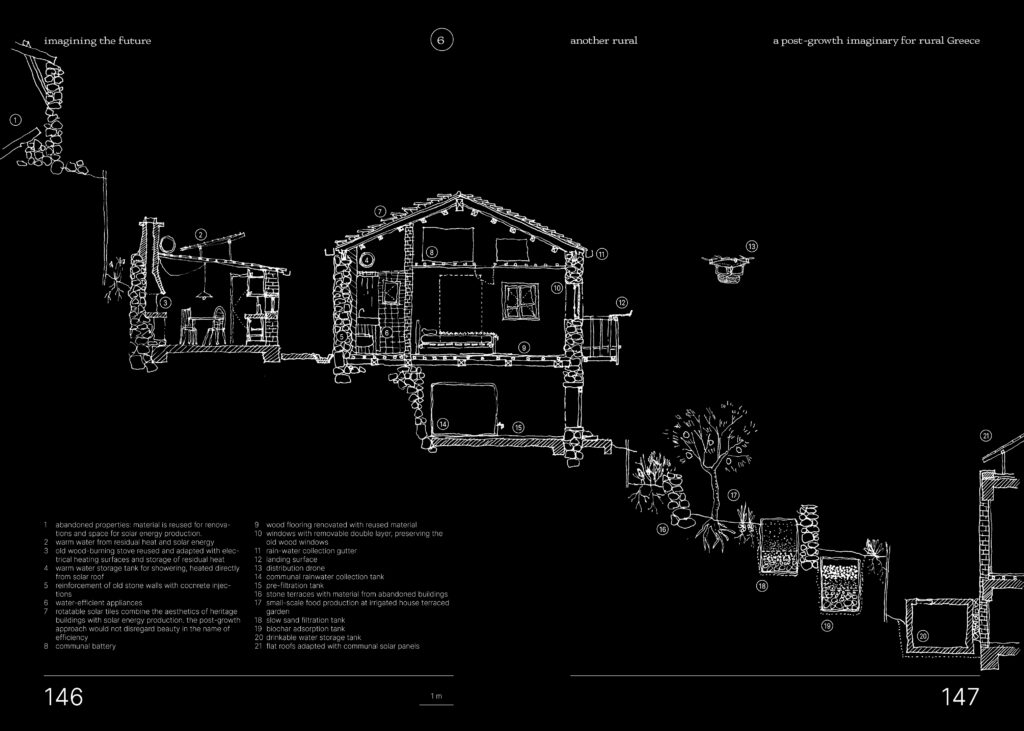
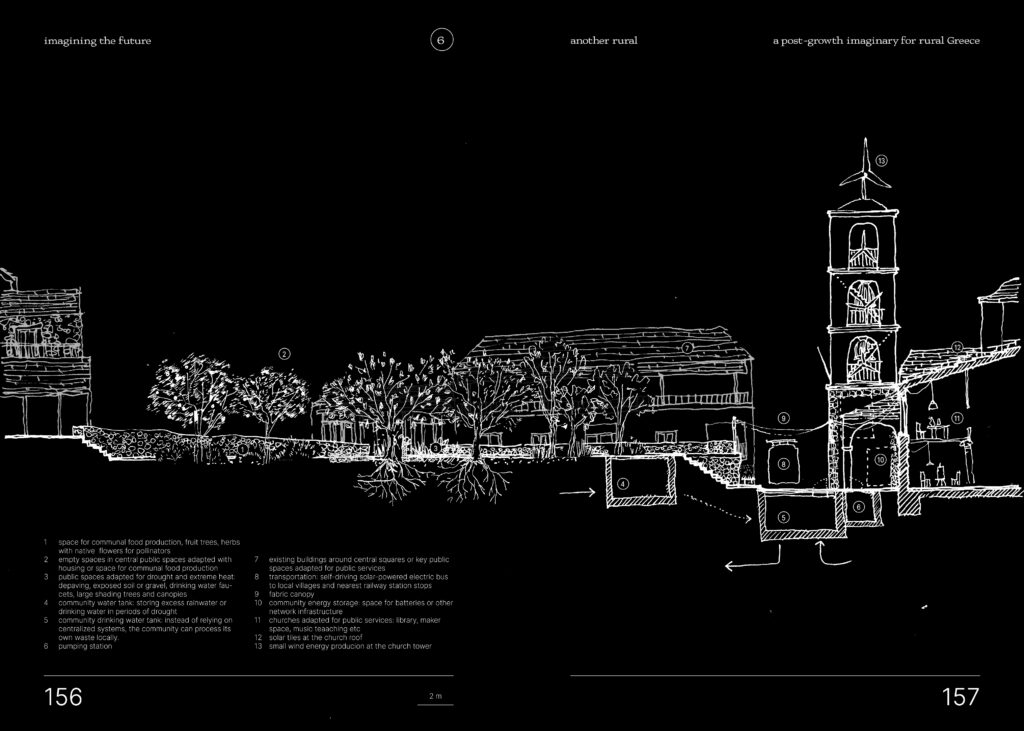
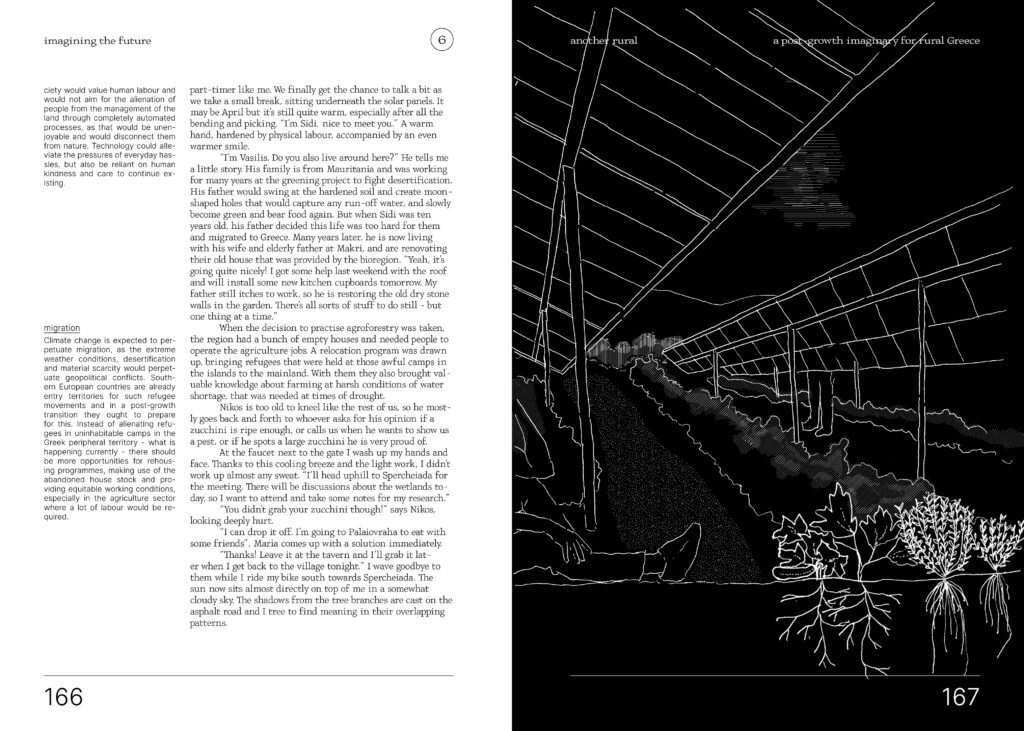
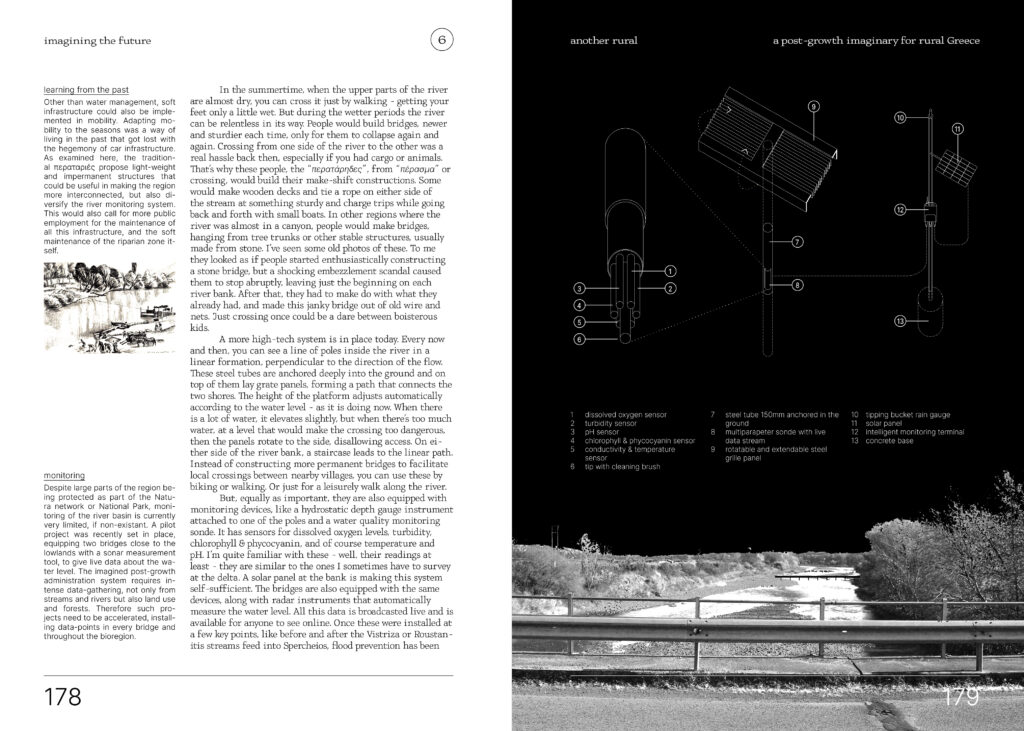
A seven chapter novelette describes a day in the life of Vasilis, a rural dweller in a future post-growth society at the bioregion of Spercheios. While Vasilis meanders through the bioregion, the story touches on a variety of scales—from the individual house to the European Union — as well as a myriad of topics, like the cross-scalar adaptation to energy and water sufficiency, the transition of the valley economy to agroforestry, the ecological regeneration of the coastal marshland, and the impact of AI in decision-making processes. Apart from the post-growth exploration, Another Rural is a story about grief, self acceptance and coming to terms with change.
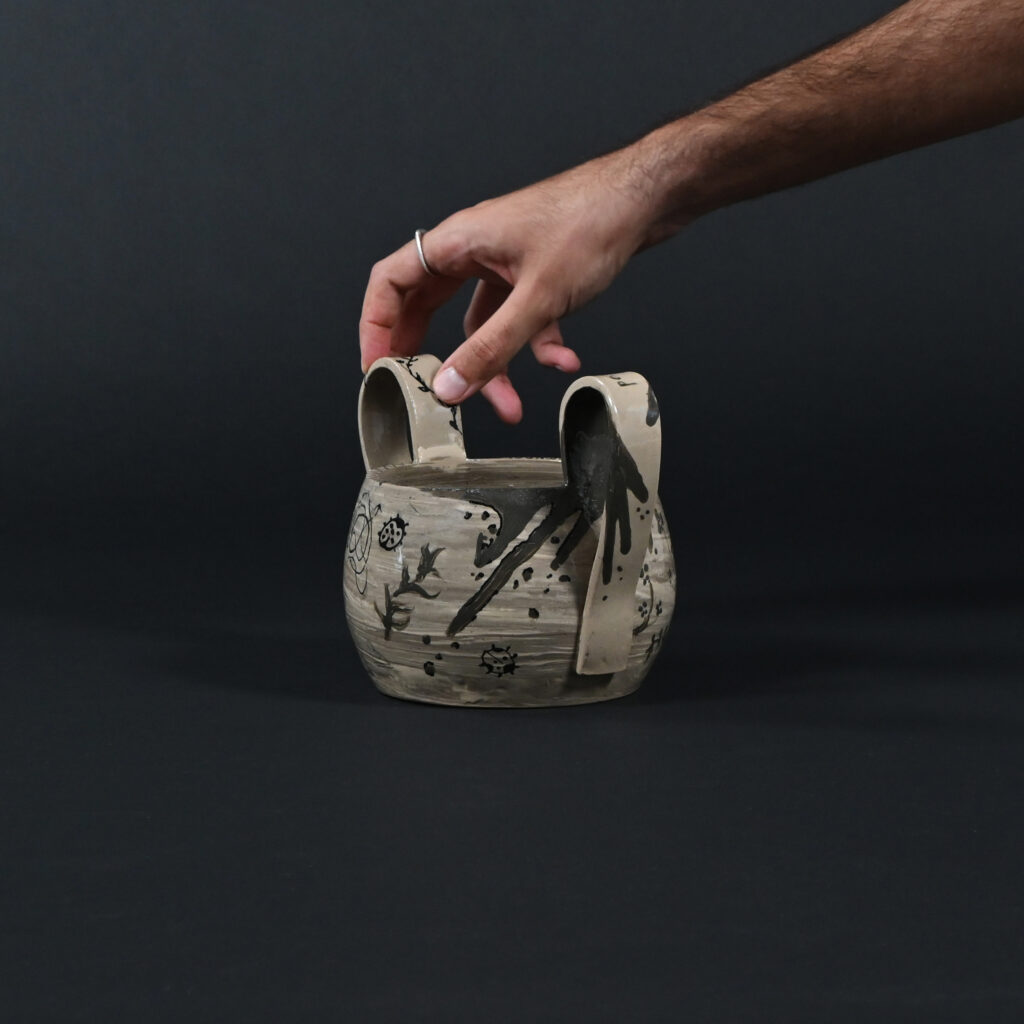
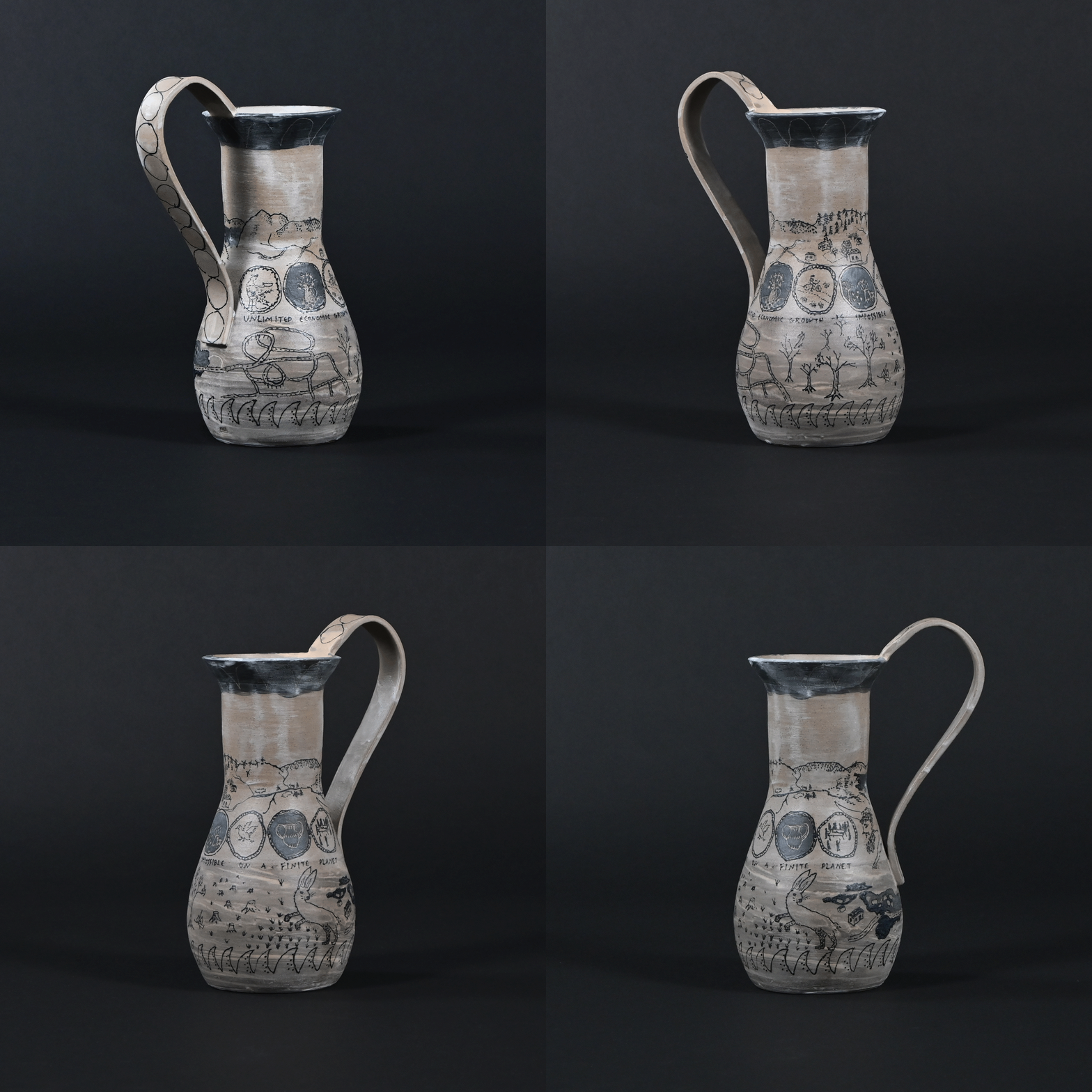
In the final chapter of Another Rural, the main character, Vasilis, unwinds back at the village’s square and encounters two ceramists working on a commissioned piece. The decorated ceramic vessel acts as a speculative artifact, detailing the transition from the perils of the era of growth, towards a prosperous post-growth bioregion. The lower half depicts the hubristic acts of human greed against the natural world. Four interrelated segments depict loss of habitat spaces from forest fires and deforestation, the hegemony of car infrastructure and destruction from frequent flooding.
Unlimited economic growth is impossible on a finite planet
The most recognizable post-growth quote signifies the transition towards another way of living. Above it, the central zone features a series of scenes that portray the values required for such a transition. Among them, a depiction of the oracle of Delphi, Pythia, urges us to head the words of science but also to embrace uncertainty in decision-making. Other scenes advocate the cultivation of a deep ecocentrism, by finding fulfillment in a local lifestyle, limiting far-away travel, learning from ancestral knowledge and shunning over-consumption. At the end, Spercheios is depicted in the form of a human-headed bull, like the river gods from Greek mythology. Together with the depiction of the imagined bioregion at the top, the vessel argues that transitioning towards an ecologically and socially prosperous future requires a shift in societal values, rather than a solely material shift.
How can you engage people to think about distant spatial futures?
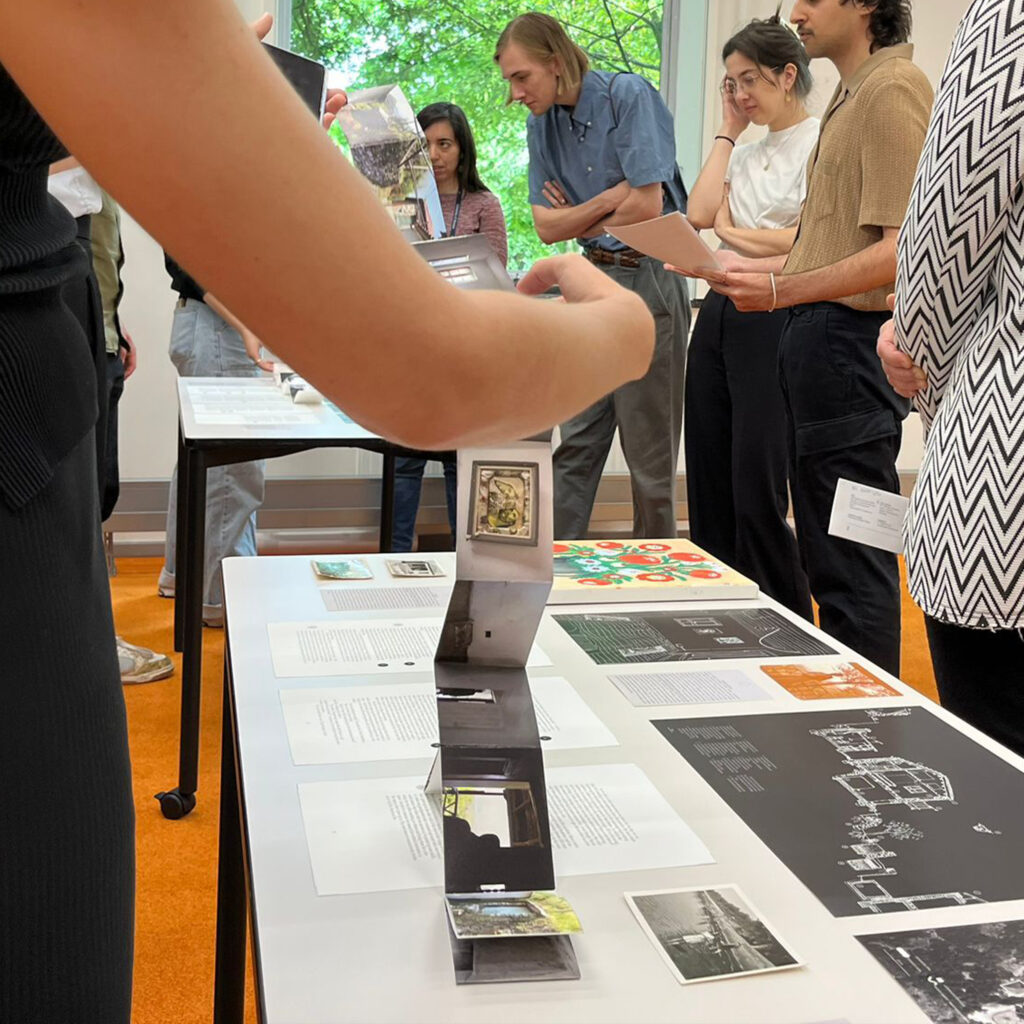
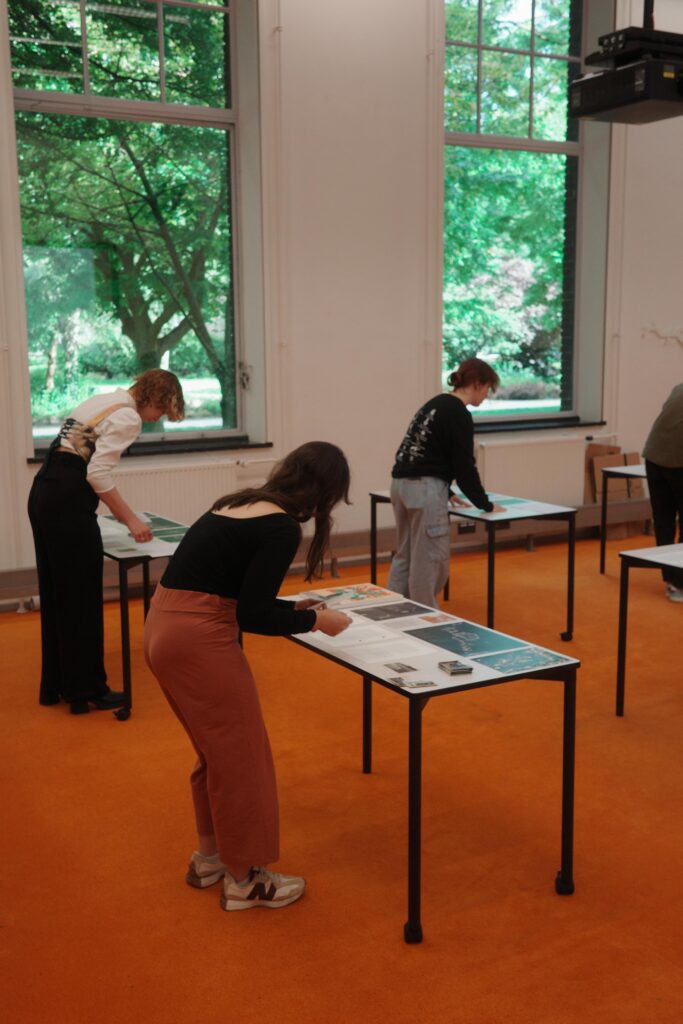
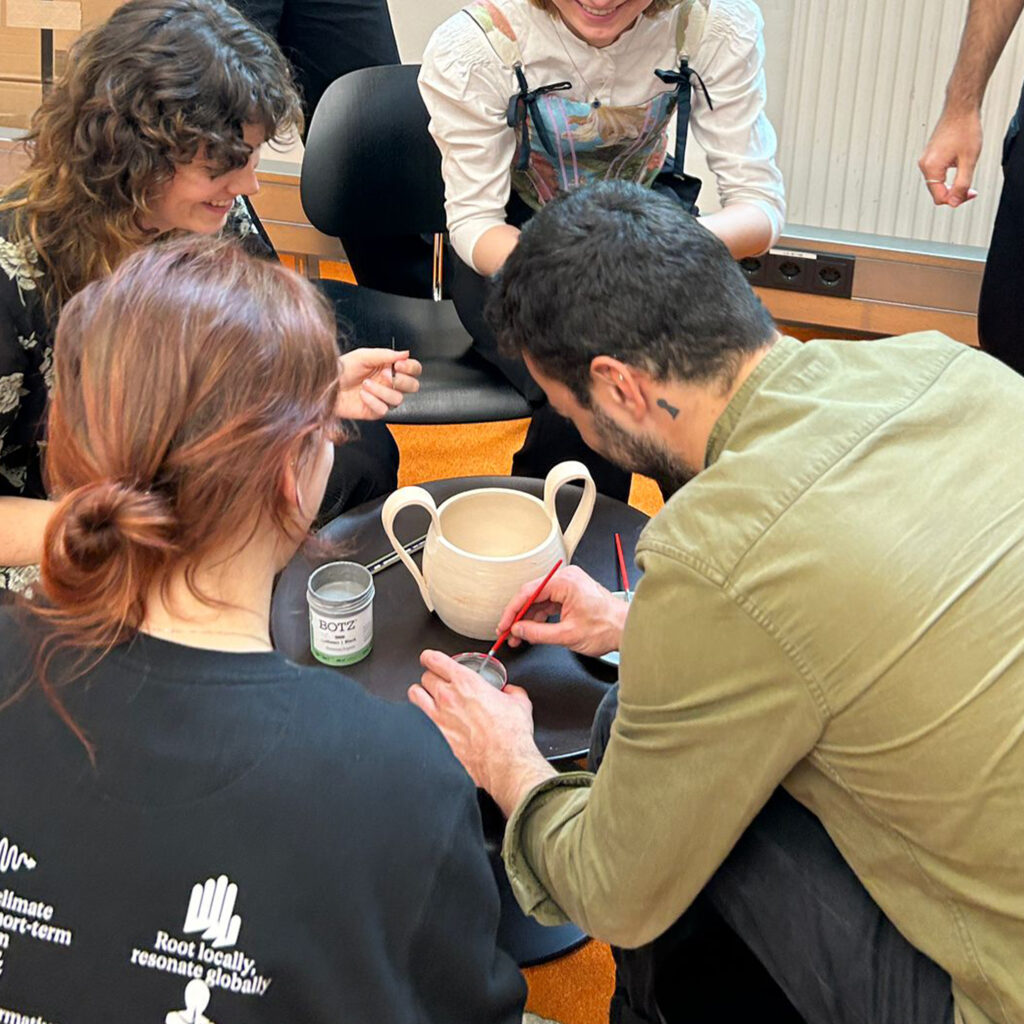
My final thesis exhibition was an experiment in itself to approach this question. Seven tables were set up with texts, images and personal objects, one for each chapter of the post-growth imaginary, in combination with a short allegorical tale on the screen. After the audience was guided through the material, they could inscribe their thoughts and ideas about a post-growth future by painting them on a ceramic vessel. Painting on ceramics has been a method of expression for several millennia. As an act of permanence, it asks for intention and symbolism. The final product is adorned with initials, key-words, spirals and natural motifs of plants and animals.