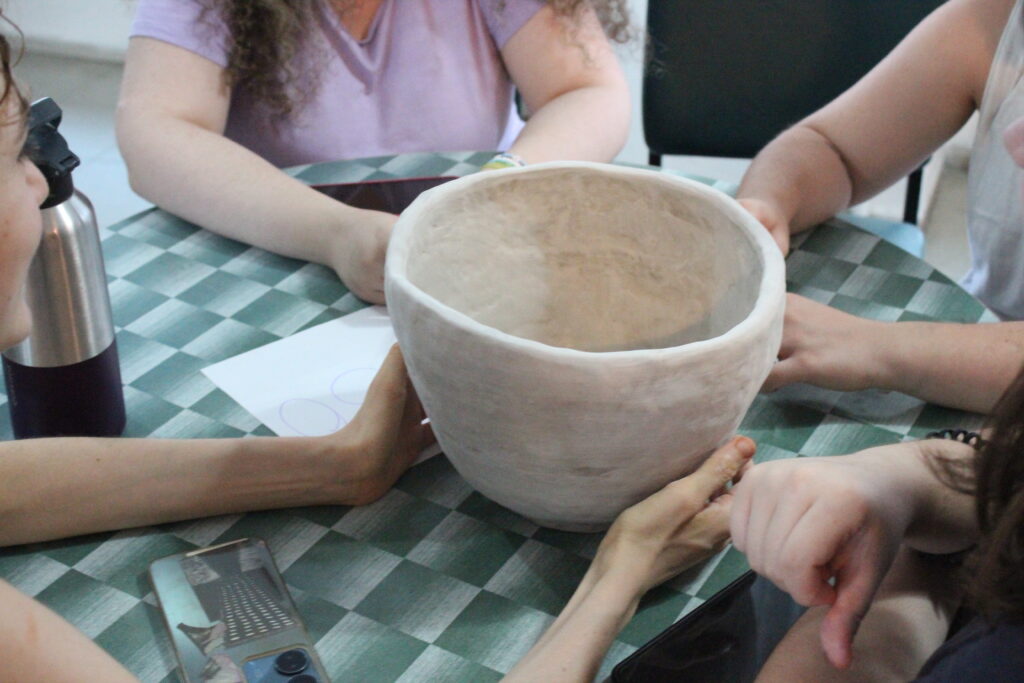
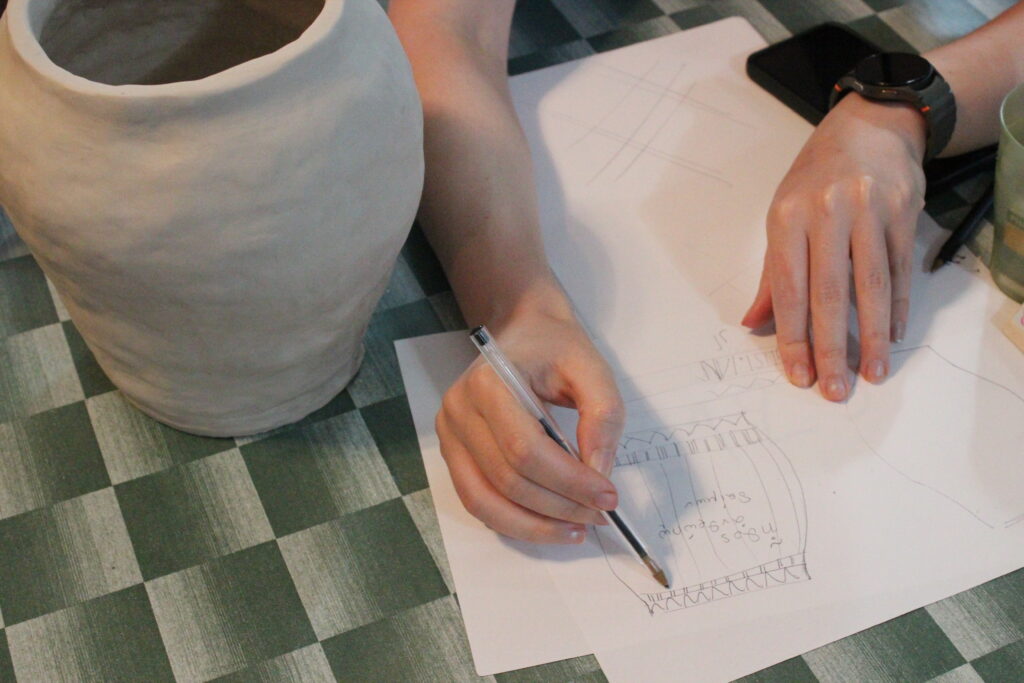
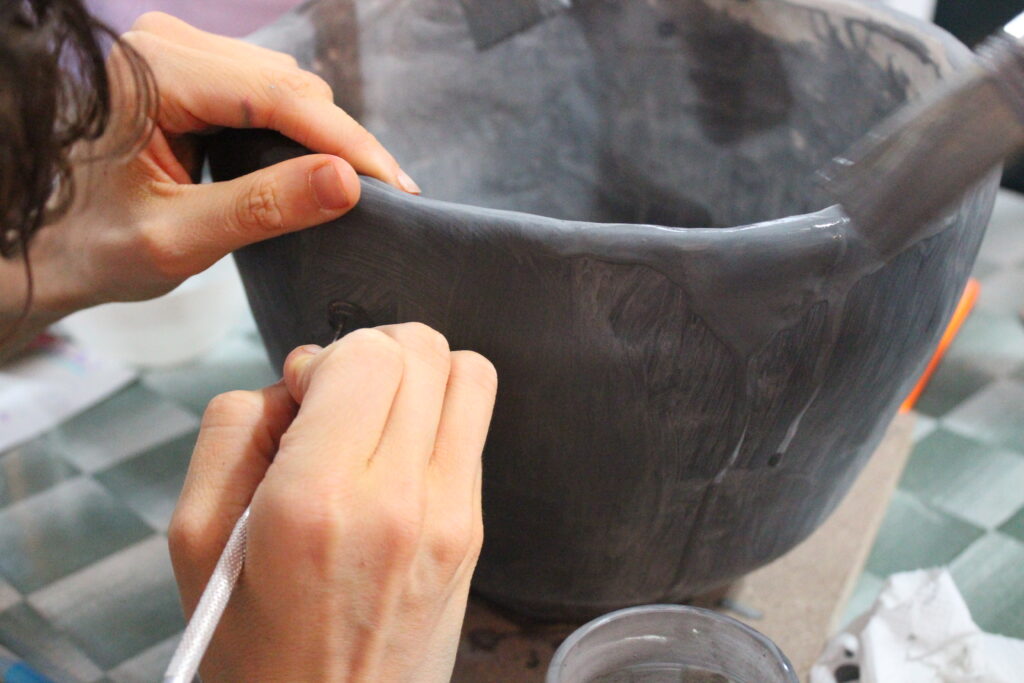
Ceramic Futures is a hands-on research project by Georgia Xypolia and Giorgos Xanthopoulos, operating between Amsterdam, NL and Athens, GR. Clay has long been humanity’s didactic medium; not only containing, but preserving histories, documenting daily rituals and collective struggles across cultures and time. Expanding on this role, Ceramic Futures explores clay as a designer’s tool for critical inquiry, by bridging ancient Greek ceramic traditions with speculative approaches to imagining spatial futures. We aim to develop a series of processes that merge intuitive clay making with visual modes of research, design and visioning, touching on topics of ecology, politics and spatial justice.
Go to the project’s website for more information.
Shaping Athens with Clay
Athens is a city full of contradictions. It is textural and chaotic, peaceful and easy, hard and tense, beautiful and ugly. With clay as our medium, we will venture into Exarcheia and explore these contradictions through gleaning — we will collect textures, reliefs, materials, forms and words. Through this, we will attempt to make the immaterial into material, to explore with our hands things that are hard to explain with words.
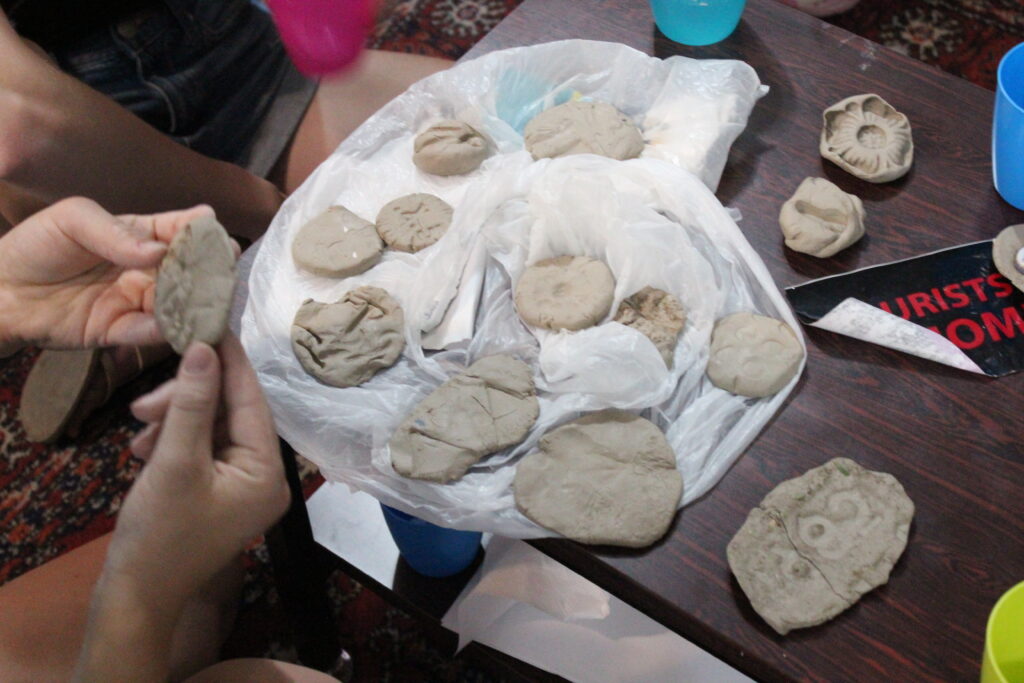
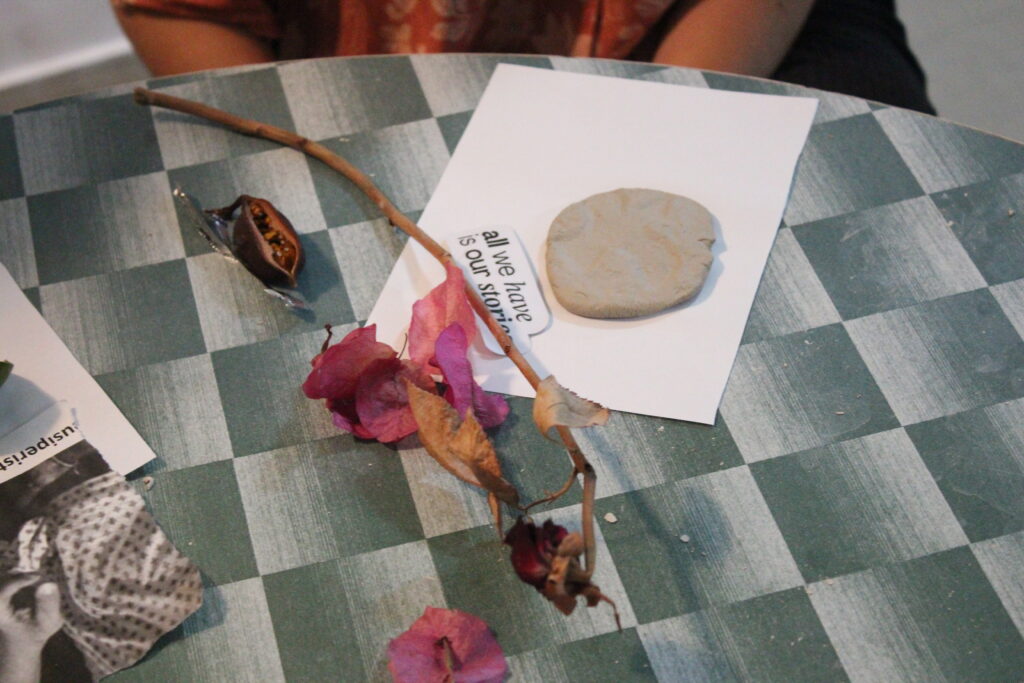
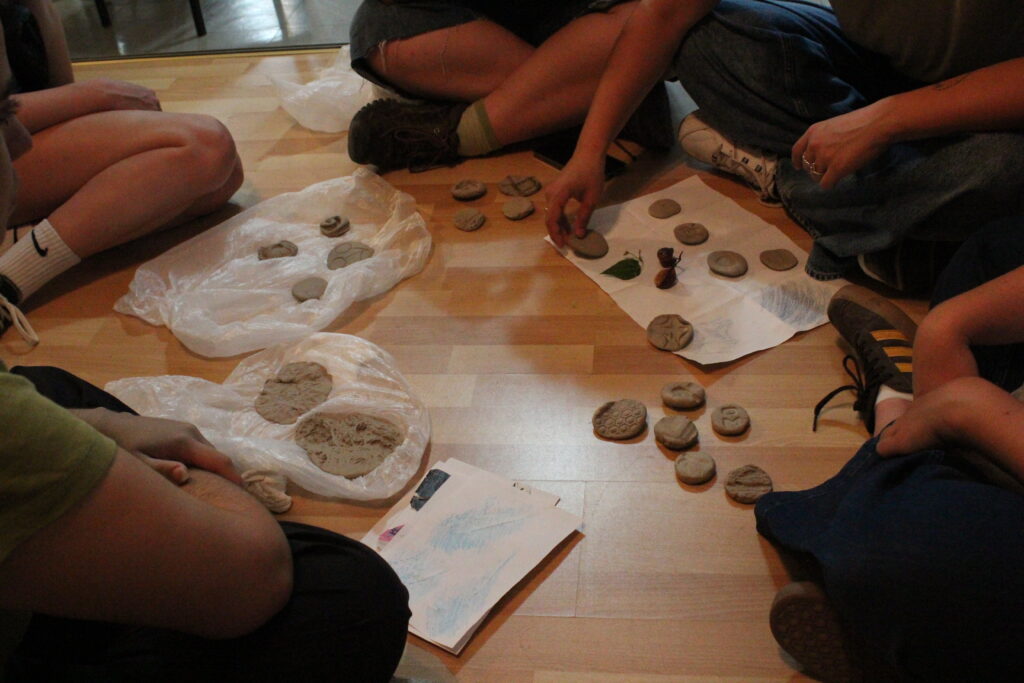
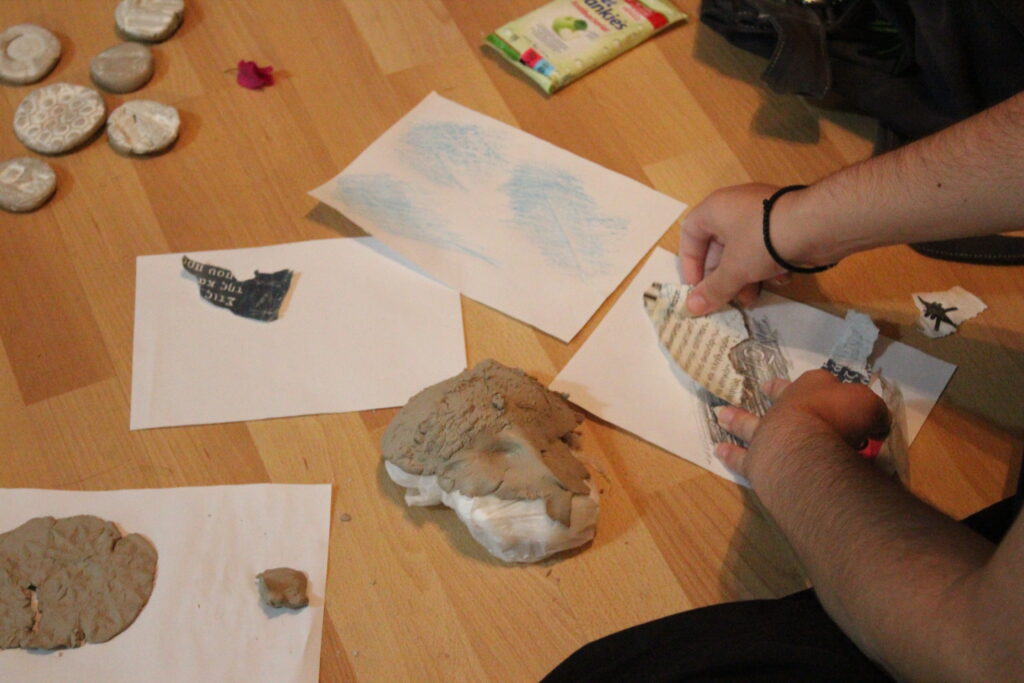
I was asked by Athens-based NGO InterAlia to organize and host a workshop for the students of CYA, who are visiting the city for the first time to study for a semester. I developed the theme of “Shaping Athens with Clay” as a way to allow them to explore the city themselves, to engage with fieldwork instead of solely engaging with activities inside the community space. The thematic structure of the workshop revolves around four Athenian contradictions: chaos-control, hope-despair, hard-soft & was-is. Participants were instructed to choose one contradiction and explore its physical manifestations in the public space of Exarcheia. This was done through three methods: collecting reliefs through clay, textures through paper and pencil, and found objects through gleaning.
Either alone or in small groups, the participants ventured into the city, reflecting on the topics and experimented with the given materials. Clay seemed to be the more favorable and exciting tool. Aside from the collection activities, some participants pushed the boundaries of architectural documentation, experimenting with capturing motion, engaging with interventions in the public space and combining textures into sculpture.
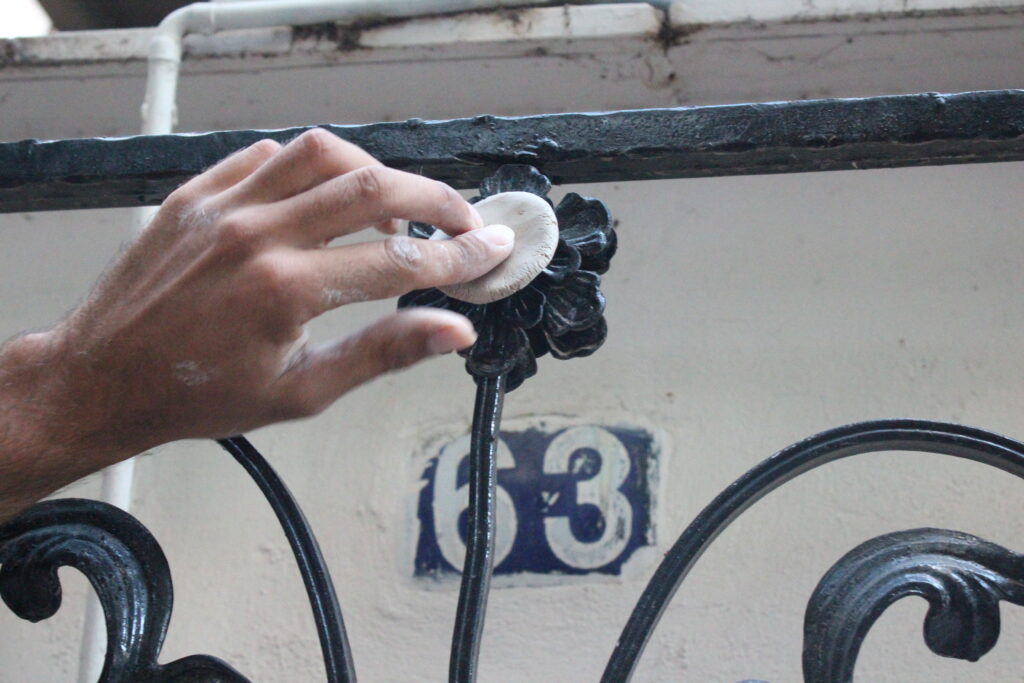
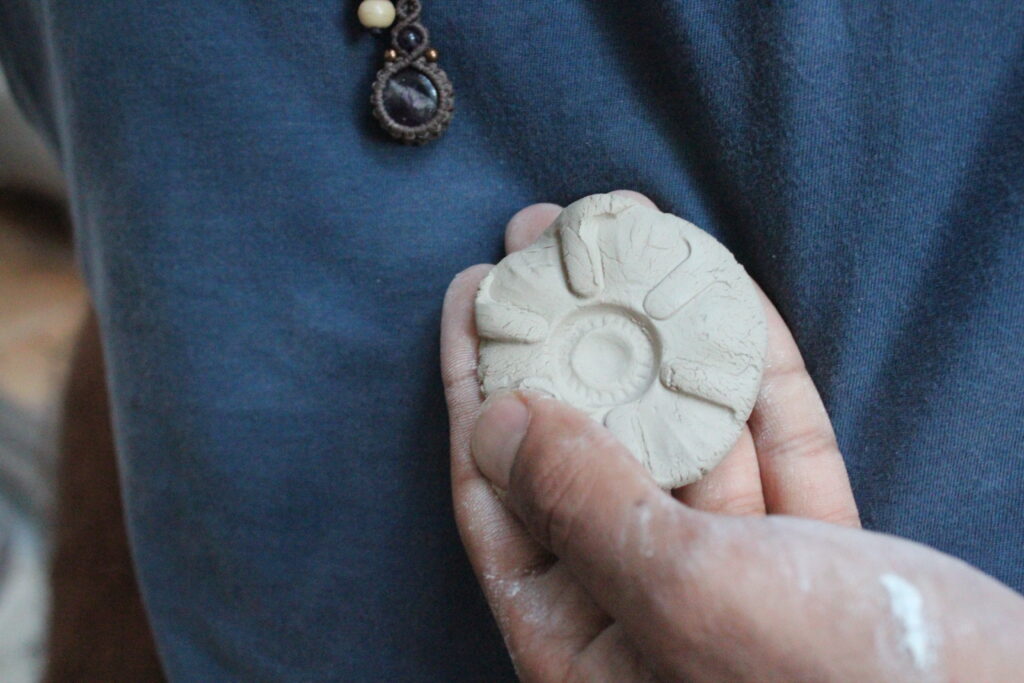
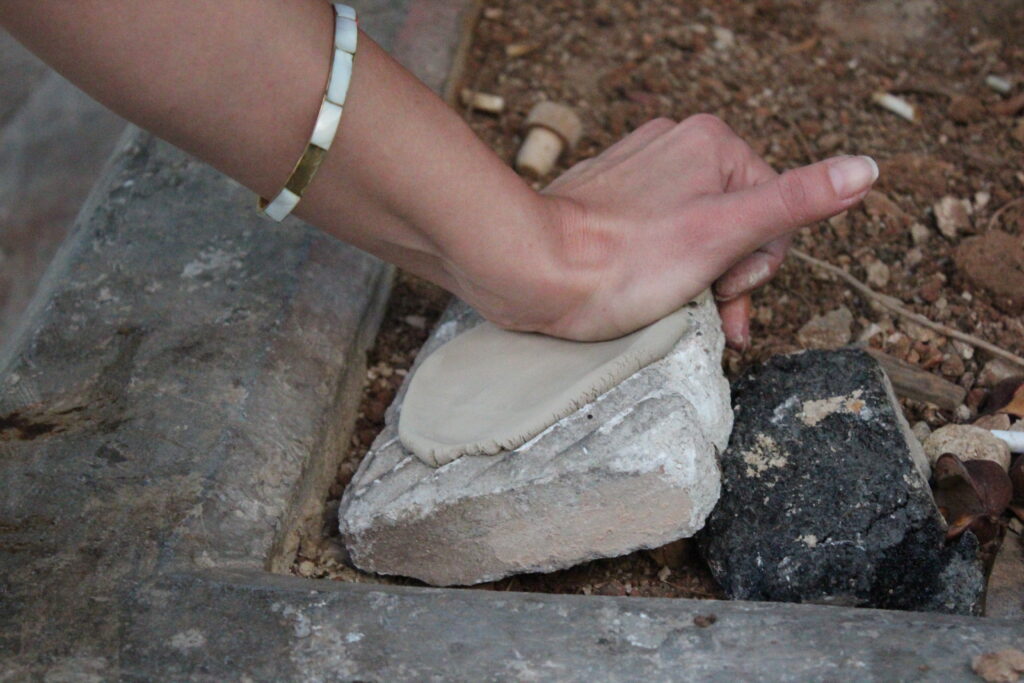
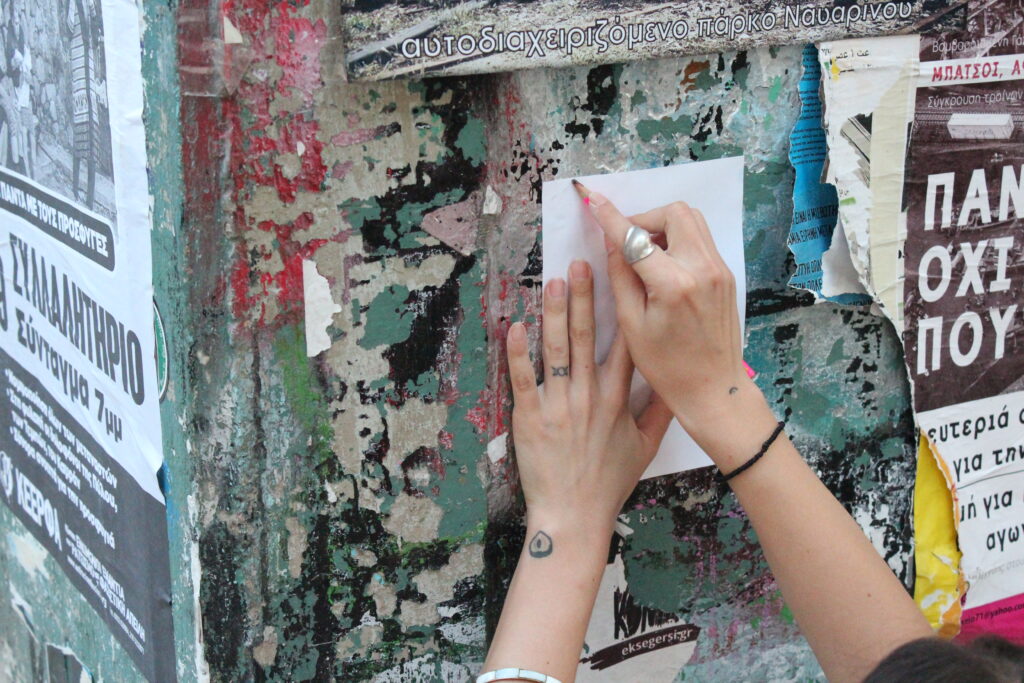
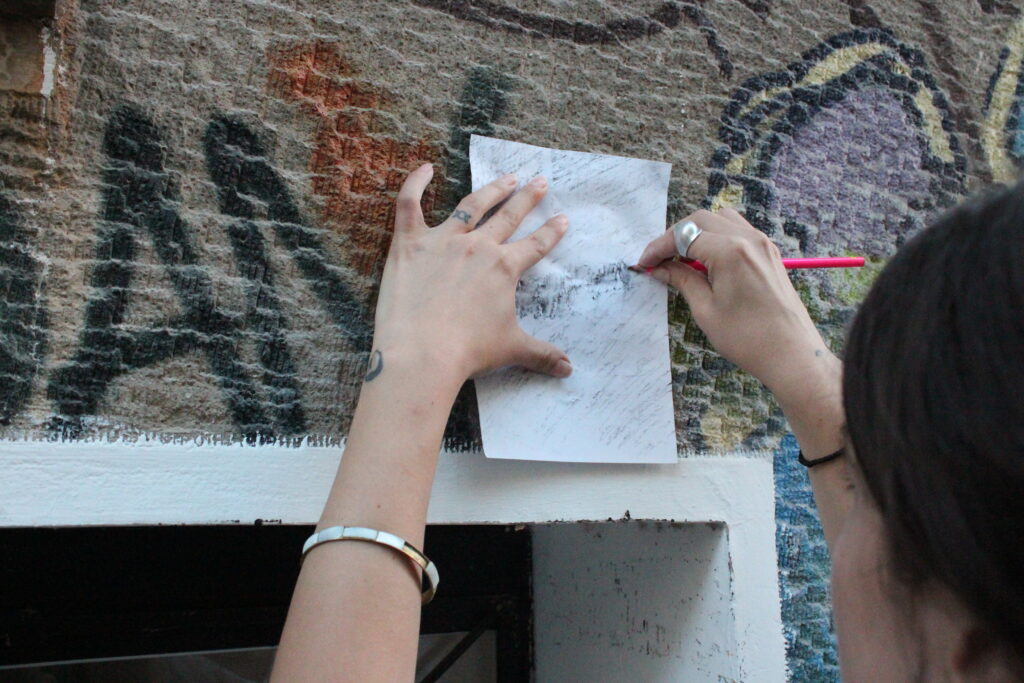
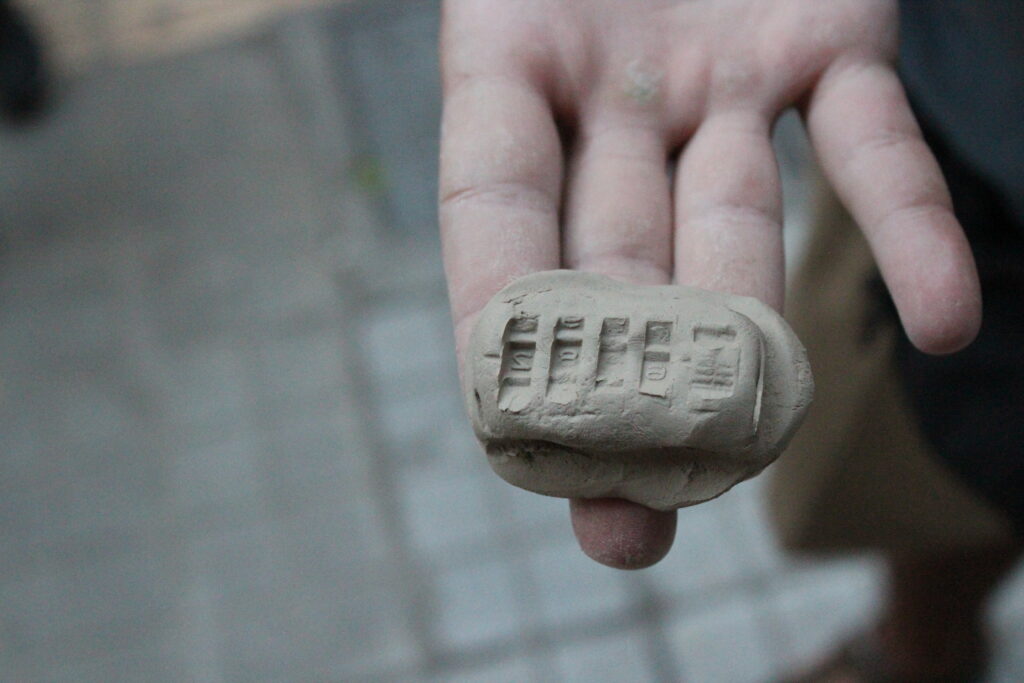
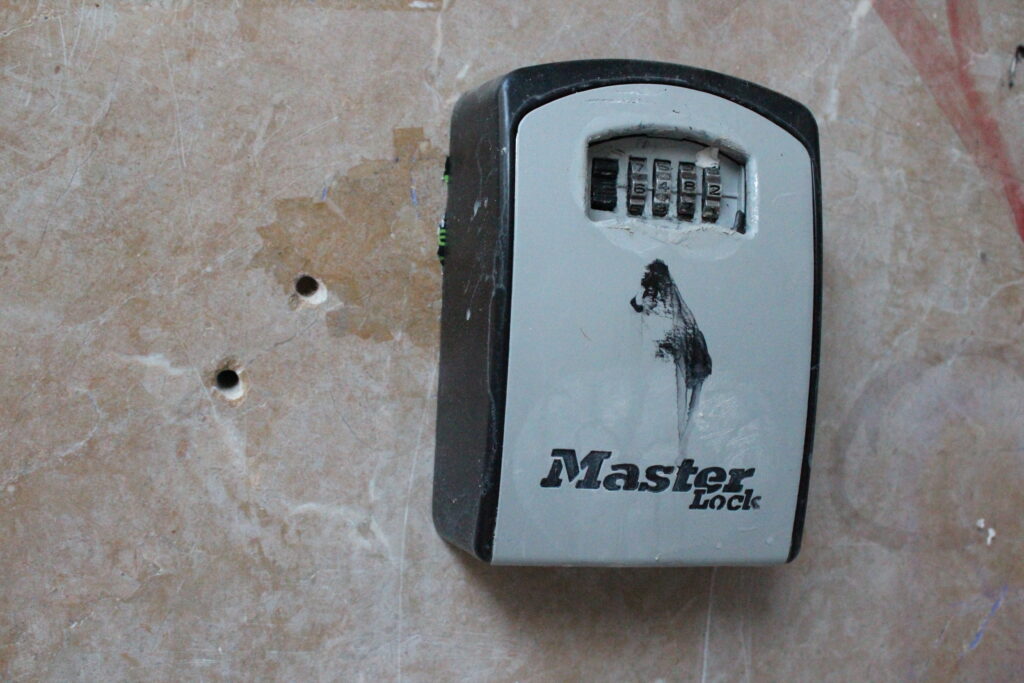
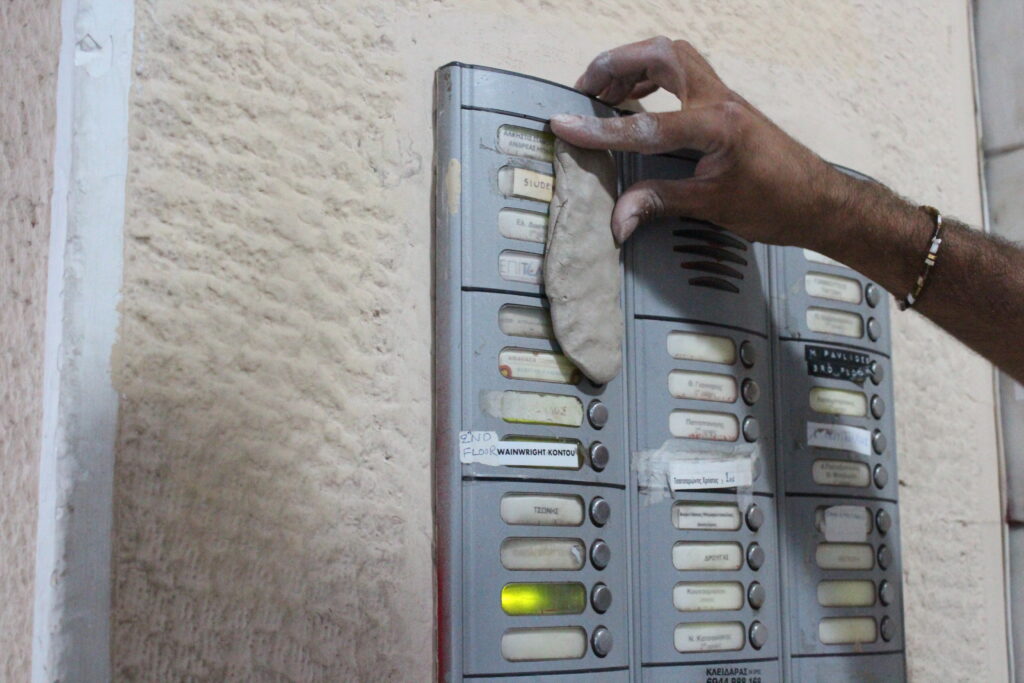
After the exploration, participants shared their findings and explained how they relate to the contradiction they investigated. The results were varied and sparked numerous conversations about contextual struggles with housing, materiality, accessibility and history. Overall, participants felt the workshop was a very fun way to get acquainted with the city, allowing them to focus on details of built space and observe through a critical lens.
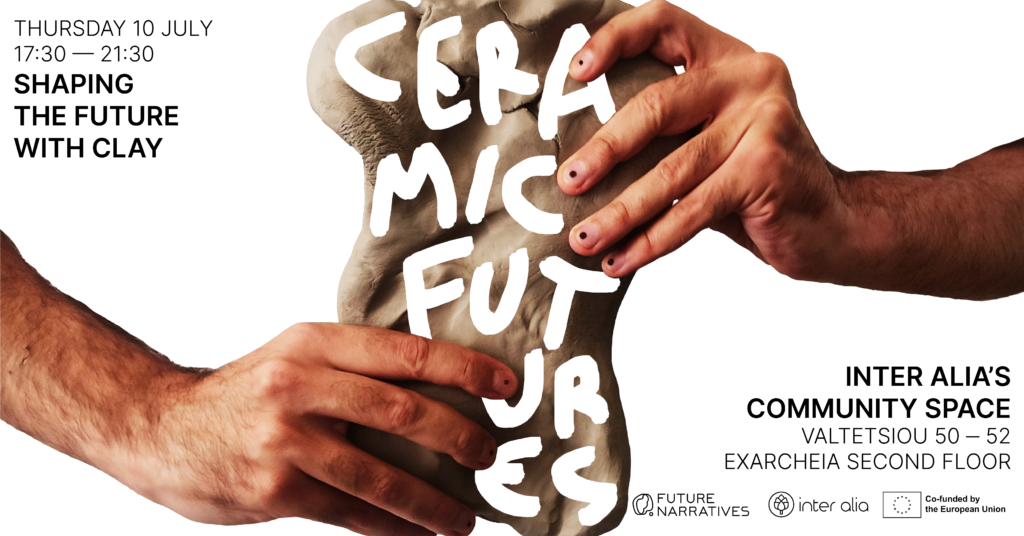
Shaping the Future with Clay
After having attended the Future Narratives festival in Ferrara, I was asked by Athens-based NGO Inter Alia to develop and facilitate the project’s final workshop, merging their methods of storytelling and futures literacy with art-based activities.
This workshop explores art-making as the intersection of futures literacy and storytelling by engaging participants with imagining, debating and documenting distant spatial futures through the tactile medium of clay. To do so, Ceramic Futures explores diverse practices, forms and techniques of ceramic culture, with a particular focus on Greek Antiquity, and reimagines them through future-oriented critical visioning exercises. The workshop is structured through seven such exercises, emphasizing the shift from individual visioning, to collaborative foresight, to constructing a collective imaginary. Following this sequence, participants first engage with intuitive clay-making, then move to structured world-building and finally with transition-thinking through art.
You can read more about it here.
Bury a secret in clay
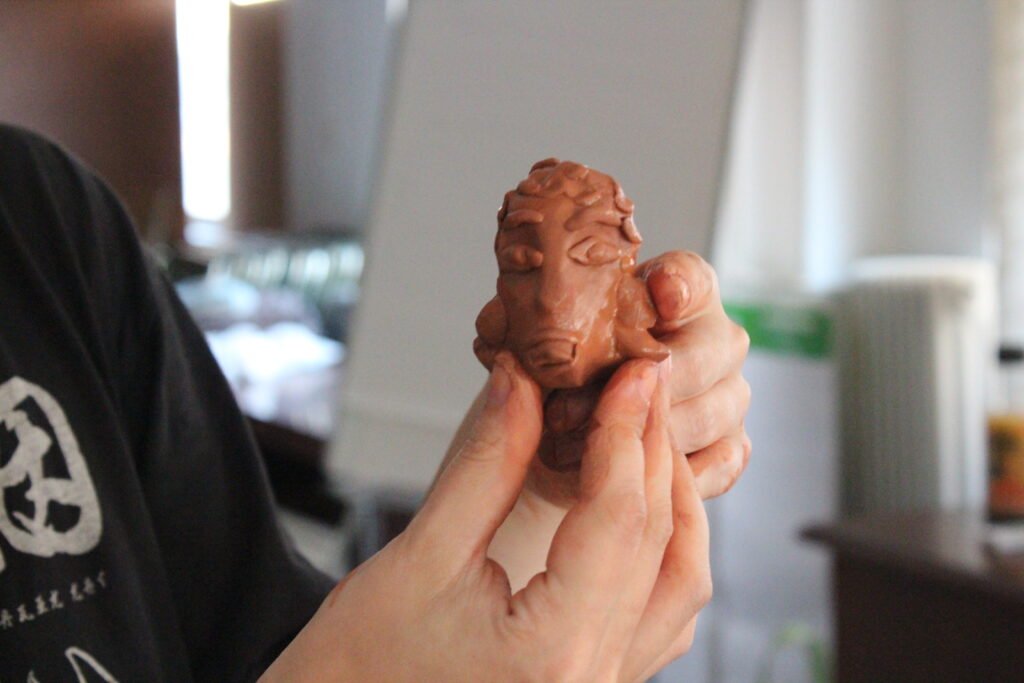
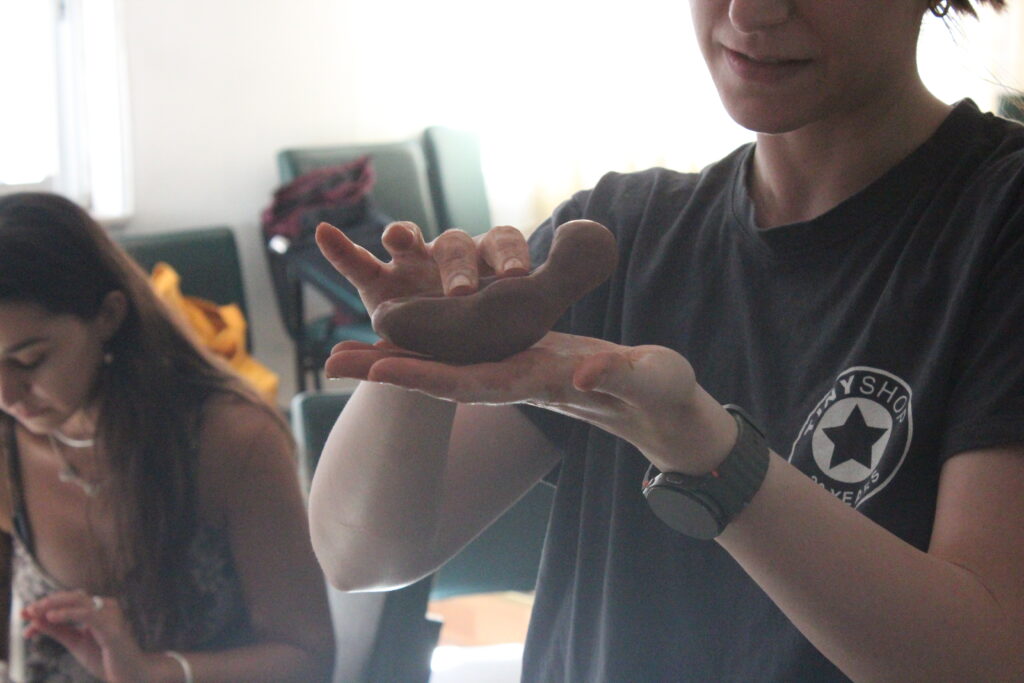
As an introduction to individual visioning, participants were instructed to write a secret, wish or description about their personal future on a small piece of paper. After they finished, they tore a handful of clay from a prepared slab, folded the paper and buried it inside. Then, they sculpted a form that related to their secret. In the end, they could share their work and give hints about how the form relates to their secret, without revealing it. Even without having previous engagement with clay, participants managed to embed deep, personal messages within their forms, resulting in a collection of unique idols.
Ostracism
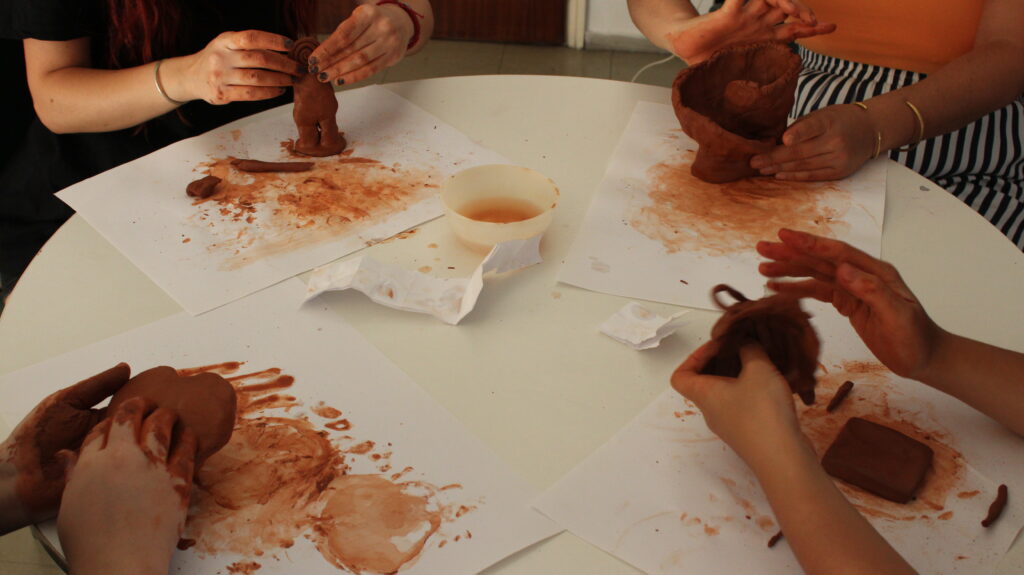
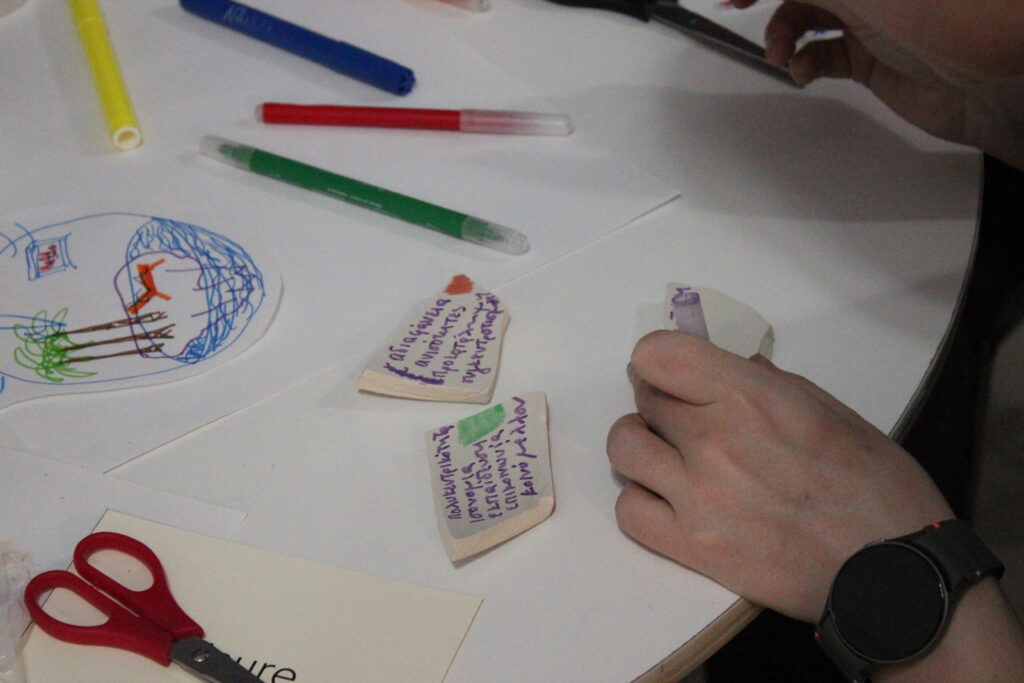
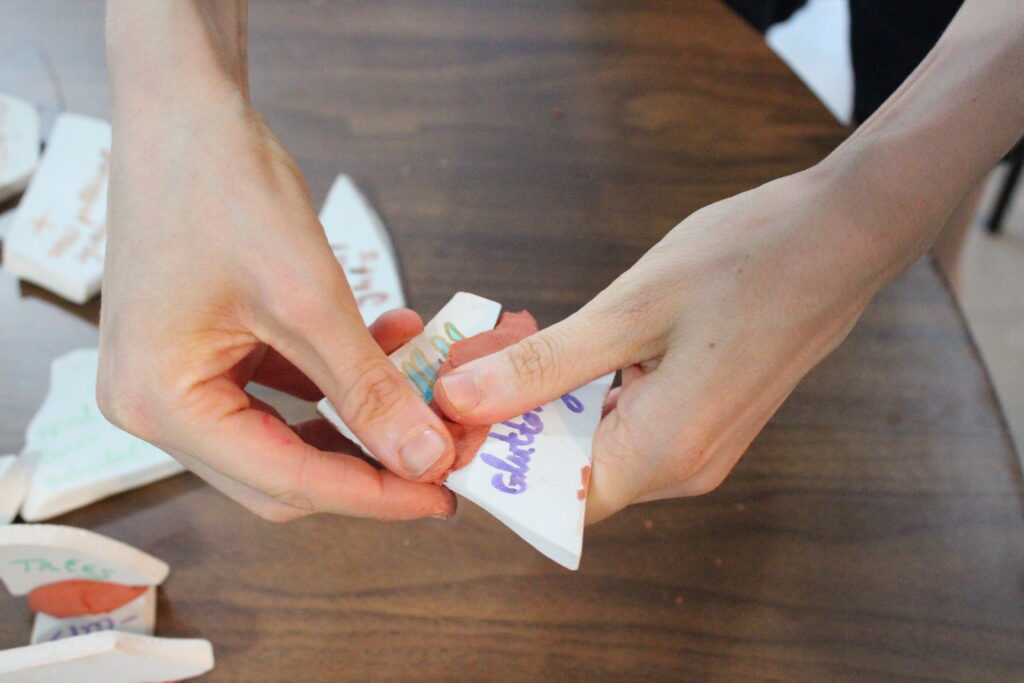
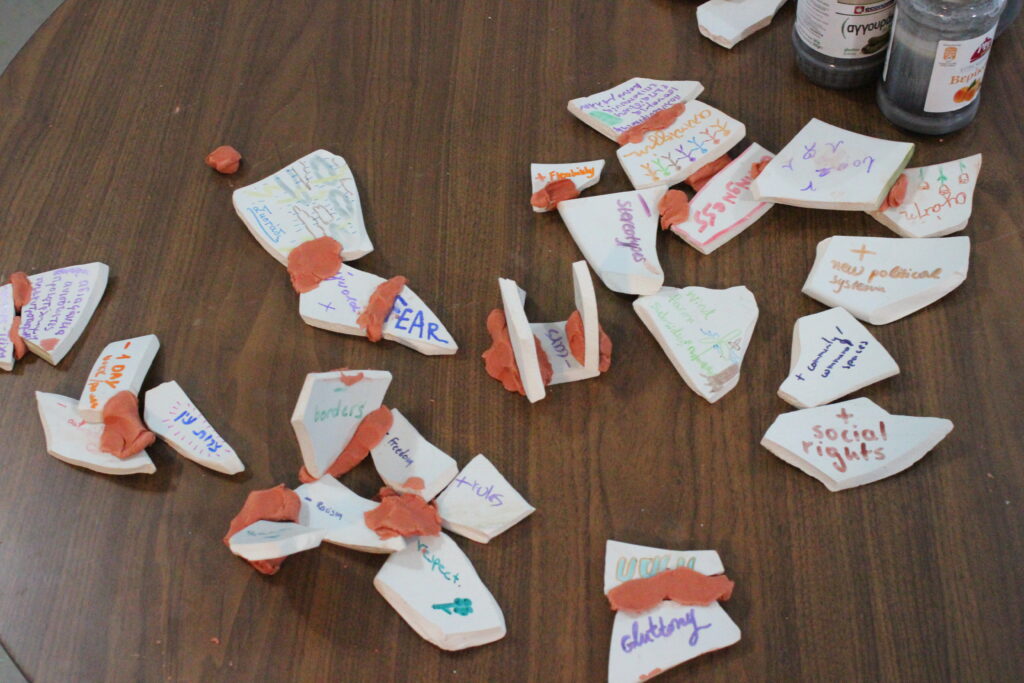
Drawing from the ancient democratic of Ostracisism (in which Ancient Athenians would vote on ceramic shards on who should be exiled from the city in order to preserve democracy), participants were instructed to inscribe on two shards of pottery what they would cull from and what they would add to our society to reach their desired future. After presenting their ideas and engaging in discussions, they found connections between these values, concepts or people, by physically connecting them with each other through soft clay. The formed miniature mosaics showed pathways towards the future, conversations held within clay form.
Visualizing Τransitions
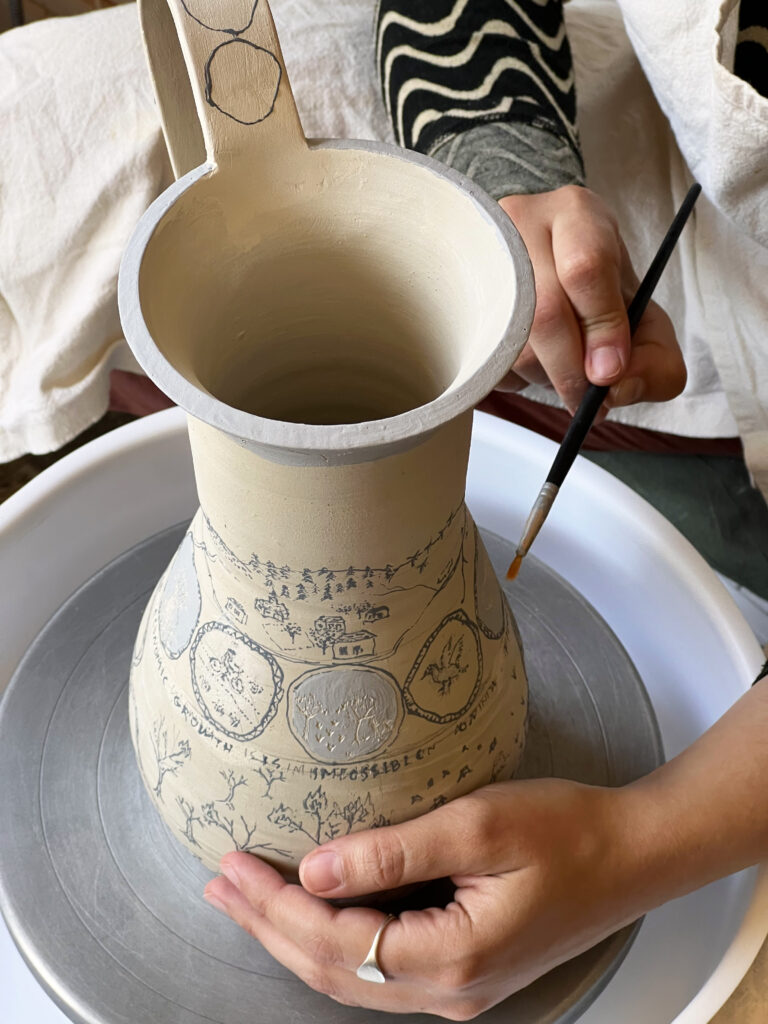
As the final exercise, participants were tasked with thinking about the desired future through transitions. They formed four groups, each representing a different moment in time: 2025 (current), 2080, 2125 and 2300. I had prepared four ceramic vessels that were bone-dry and we collectively distributed them among the groups. The participants then had to discuss and decide how they would depict their specific future by carving didactic scenes, symbols and patterns on the surface of the painted vessels. The end results are varied and explorative in terms of theme, symbology and technique.