designing urban environments course, TU Delft, 2023
tutors: Rients Djikstra & Michalis Hadjistyllis
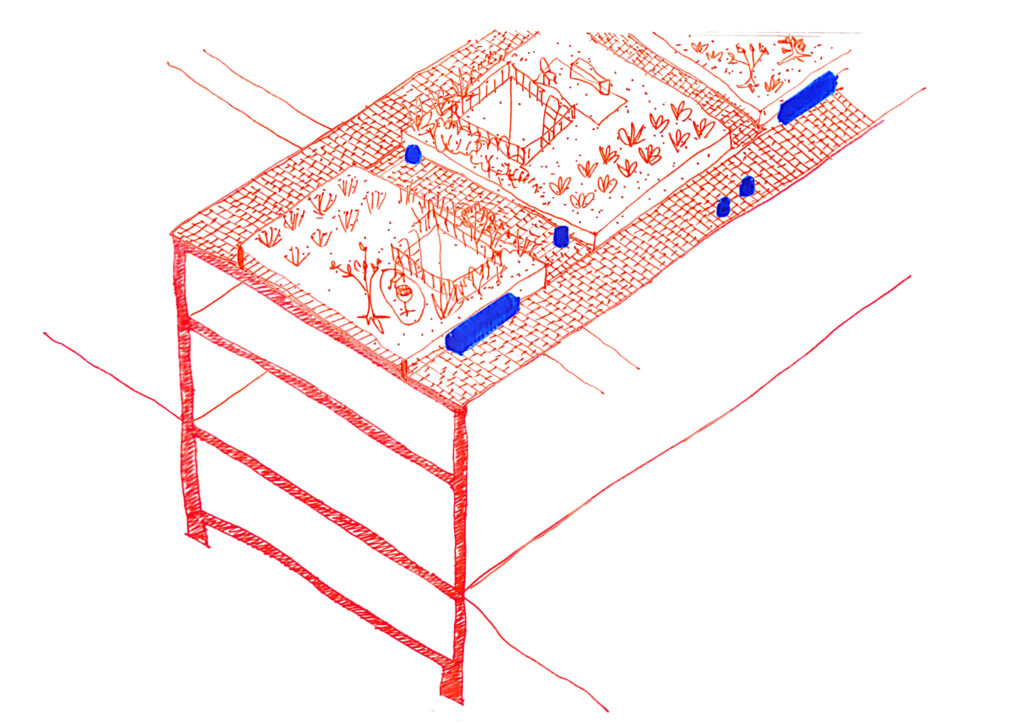
In the centre of Rotterdam, the Lijnbaan was a revolutionary shopping street in the middle of the past century. Today, its monofunctional character is disallowing other opportunities to emerge: shoppers overcrowd the main road, the backstreet are uninviting and unsafe, and the local residents struggle to have a sense of neighbourhood. What could be the future of such places of over-consumption? In a scenario of decline in physical shopping and considering the immense housing crisis in the Netherlands, the Lijnbaan is envisioned as a lively mix-use neighbourhood, infiltrated by housing units. The otherwise open and shopping-oriented public space is segmented, unifying the main walkway with the backstreets, the rooftops and the neighboring residential buildings.
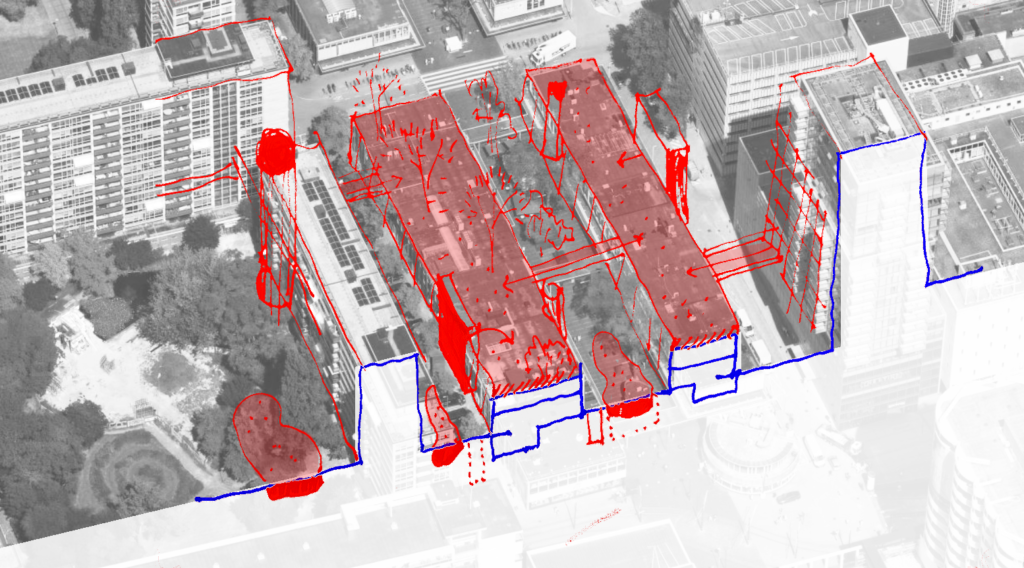
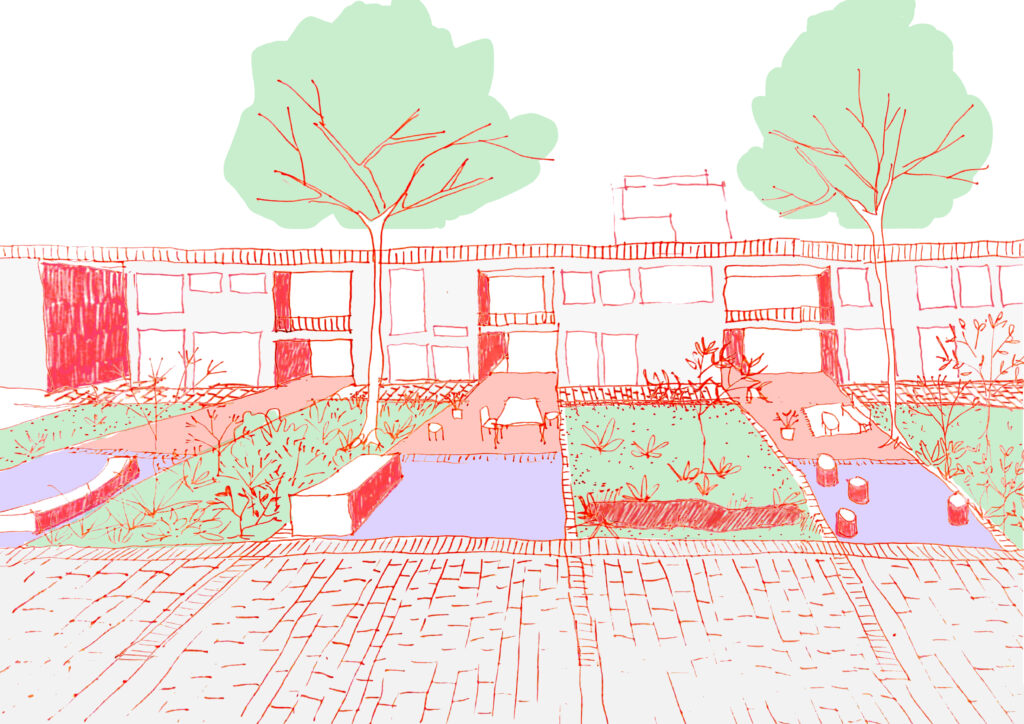
main walkway
The 18-metre walkway is divided through the introduction of a flexible public public space zone in the middle. This zone is populated by patches of public green, patches of unmaintained, wild green, and by patches of public space with sitting elements. The remaining zones of unobstructed walking maintain access to the shop façades.
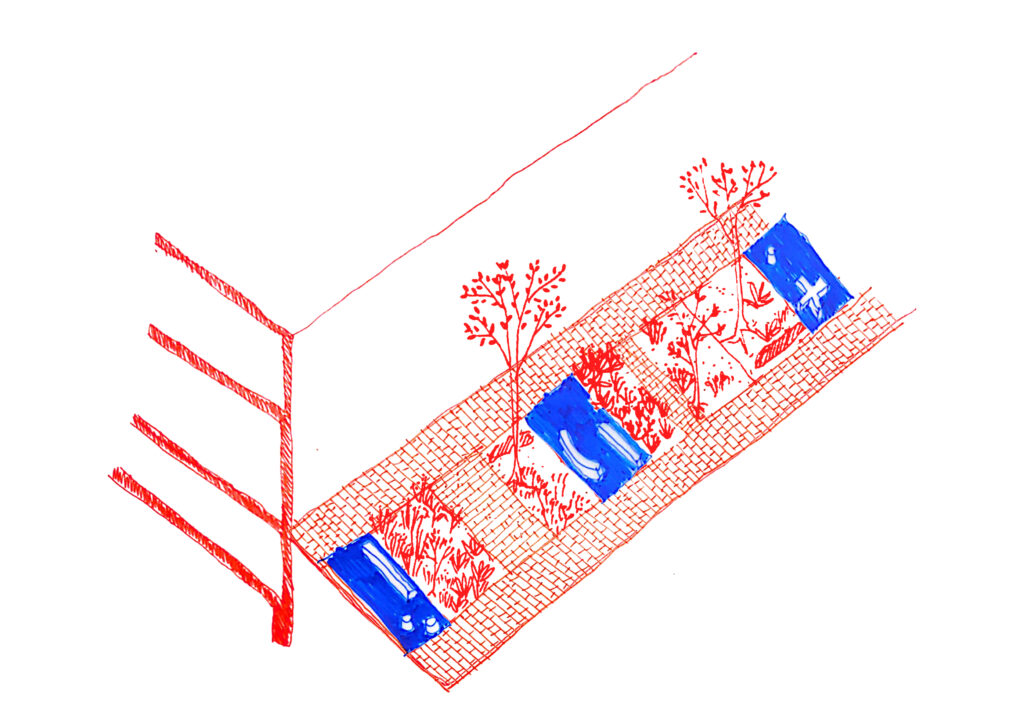
backstreet
In order to activate the service street at either side of the Lijnbaan, access to the new housing units is granted from them through 2-metre setbacks. Similarly to the main walkway, the public space is redefined through a flexible zone, allowing for the creation of a slow-traffic lane for biking, service and small emergency vehicles. Patches of public space are allocated to the new housing units, making the street lively and personalised. A set of towers give access to the rooftops.
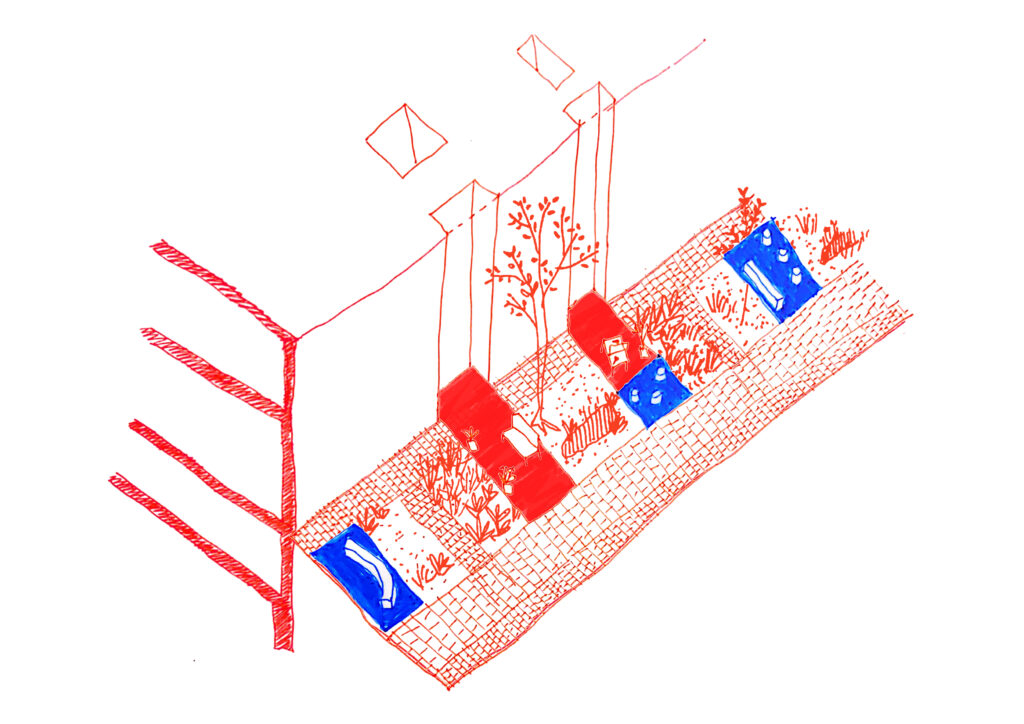
rooftop
A flex zone is also introduced on the now accessible rooftops of the Lijnbaan. Walkways of unobstructed movement are populated by public sitting furniture and surround elevated patches of public green or unmaintained, wild green.
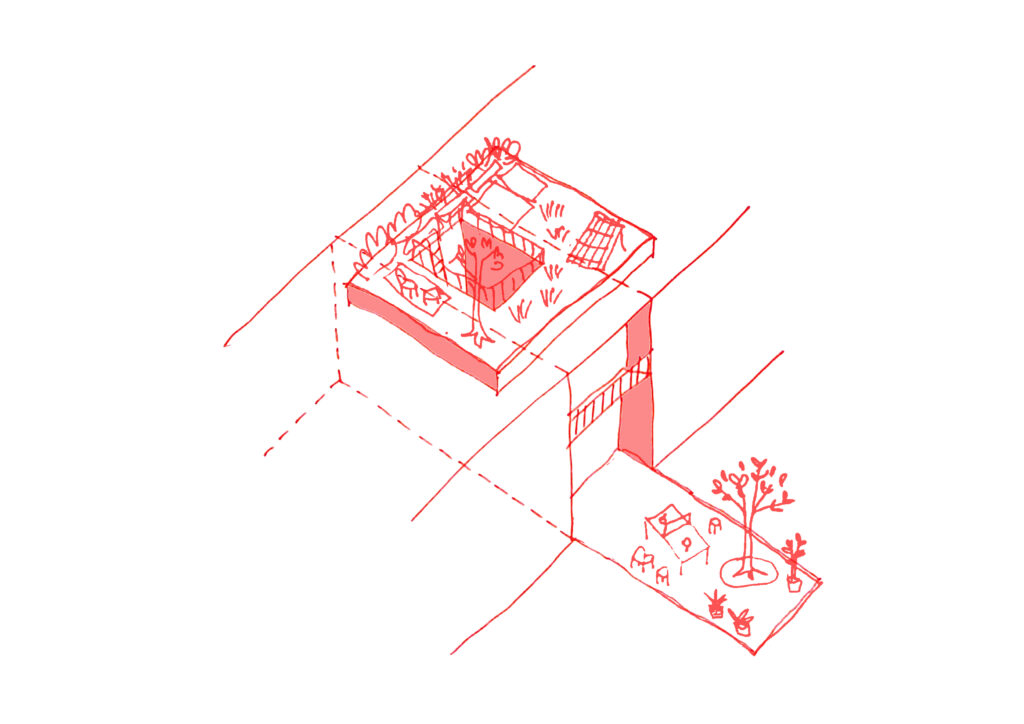
semi-public spaces
The new housing units are thin volumes, extracted from the shopping functions. They occupy the ground floor and upper floor and are recognised through a setback and a rectangular courtyard per housing unit. The residents can decide how the public space will be occupied – perhaps a ping-pong table, a family tree, or a shaded co-working space. Similarly, a green-roof patch around the courtyard could be occupied by a large area, urban farming or solar panels.
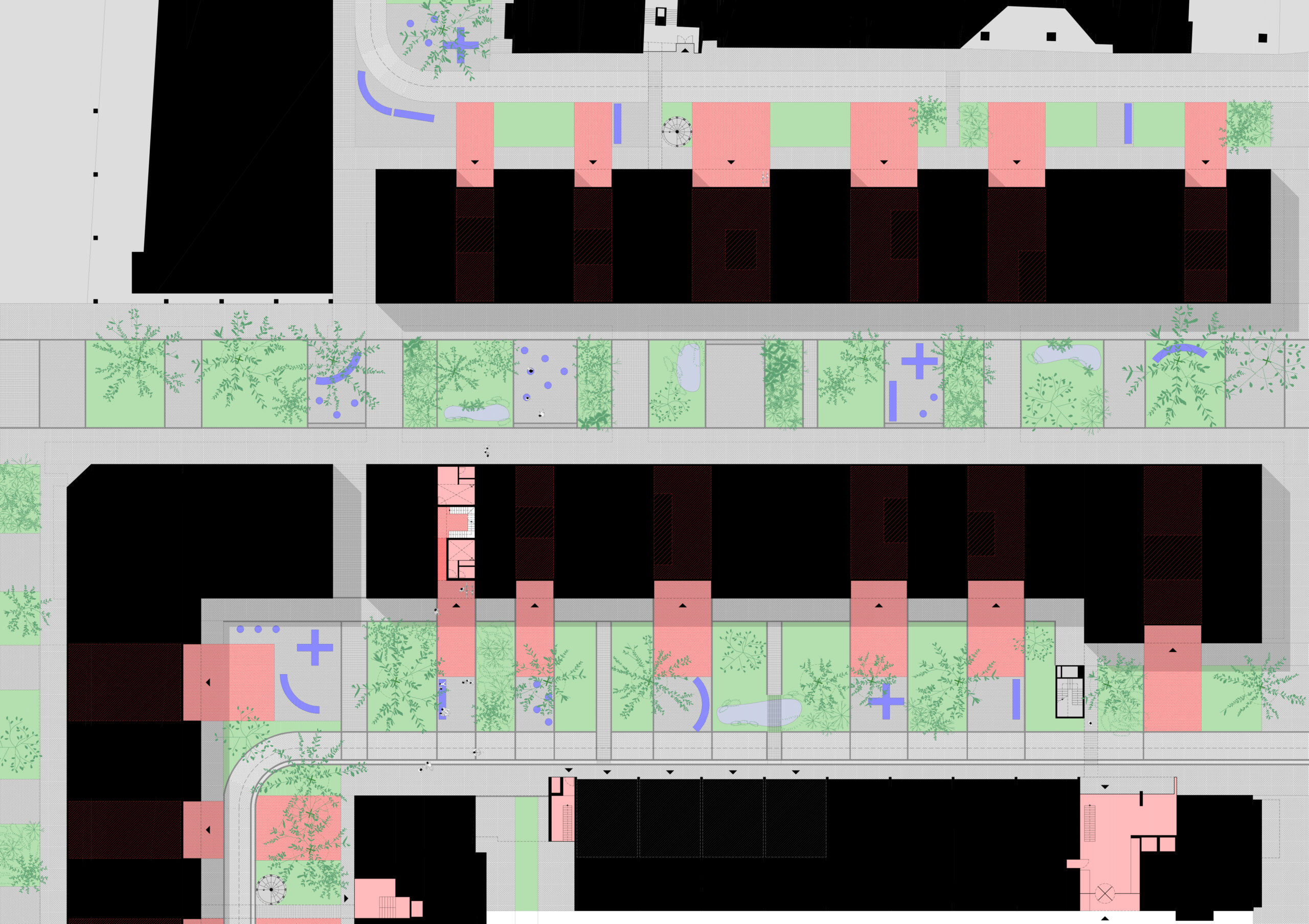
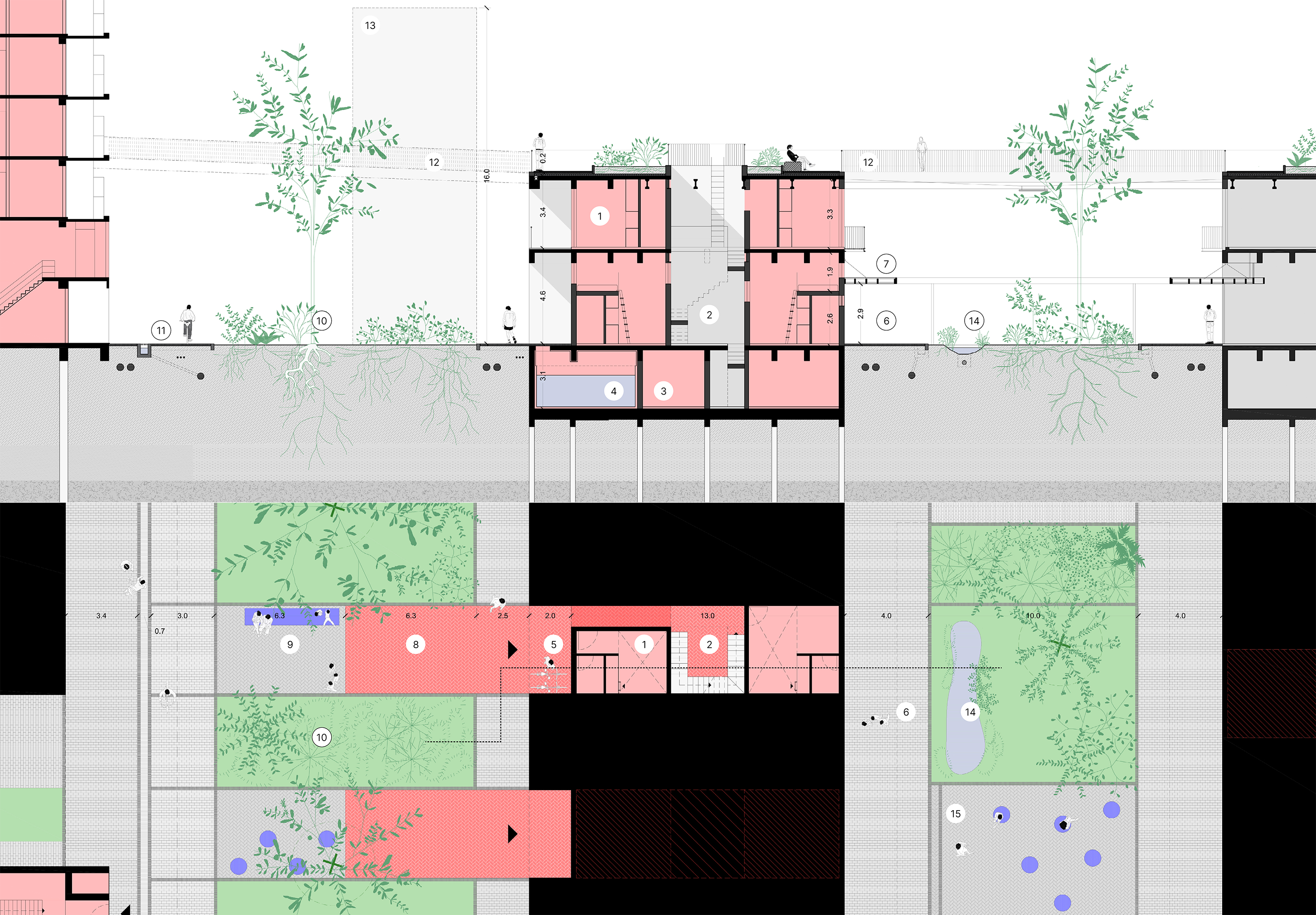
ground floor plan
- connecting path
- wild green patch with flowers and bushes for pollinators
- maintained green patch with small water features and taller trees
- public space with varied sitting arrangements
- small connecting path
- communal space in front of
- public space with sitting arrangements
- public path for shoppers and local residents
- low-speed paved lane for bikes, service and emergency vehicles
- ground-floor storage units to be used for the service unloading and distribution to the nearby stores, or adapted for more commercial or residential space
- new residential unit with setback as entrance and rectangular courtyard
- publicly maintained green space with small ponds for water storage
- rectangular tower staircase with elevator access for the public towards the public rooftops
- existing storage units can be adapted into
- existing residential lobby
- cylindrical tower staircase provides access to public rooftops
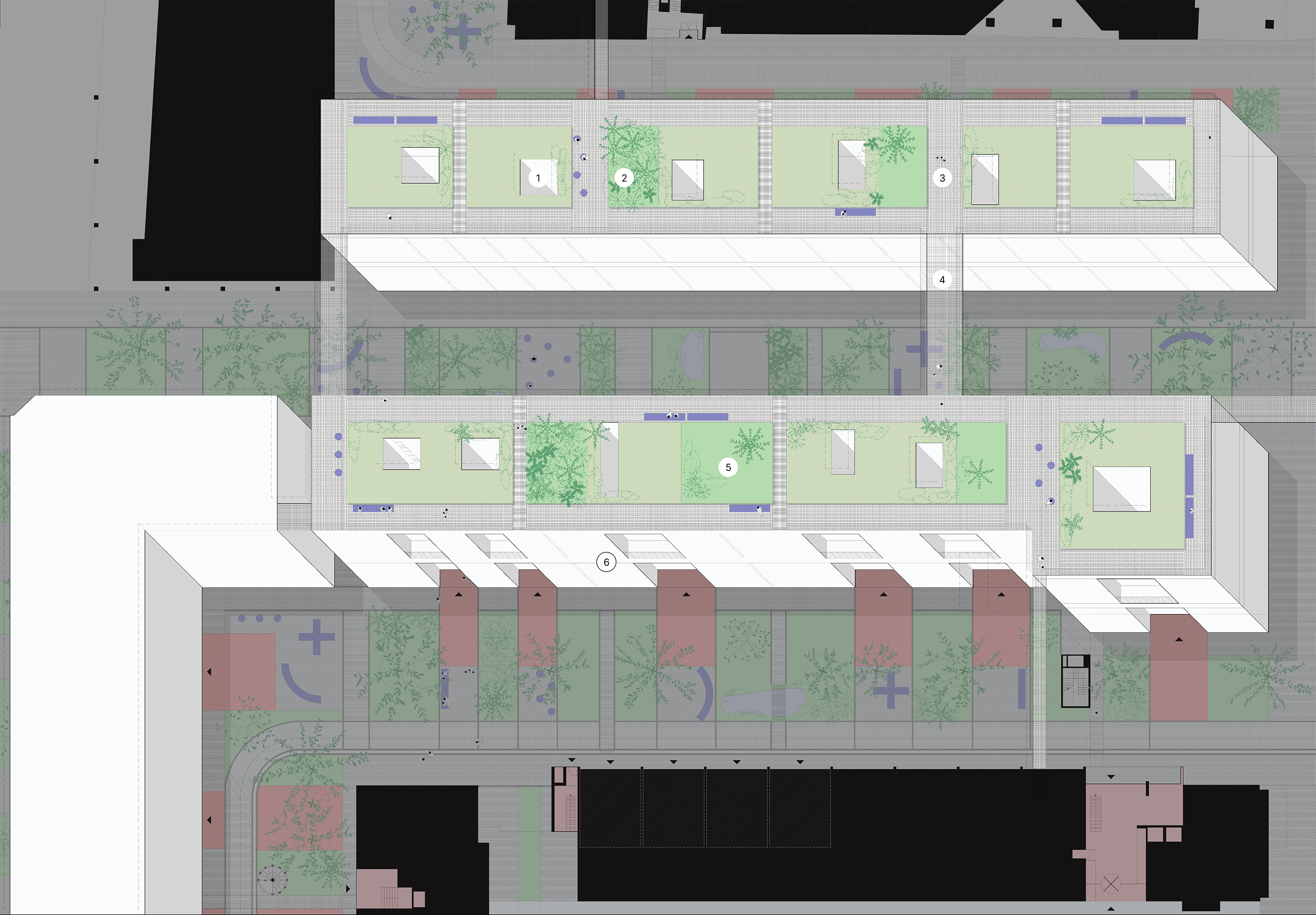
roof plan
- communal courtyard provides light and air to the housing units, as well as access to the rooftop for the residents
- patch of wild, unmaintained green
- walkway
- elevated bridge on top of the existing canopy structure
- patch of publicly accessible maintained green
- the two metre setback marks the entrance towards the residential units on the ground floor and creates space for a balcony on the upper level
section and detail plan
- ground floor housing unit with single space, loft bed, kitchenette and bathroom
upper floor housing unit with single space, kitchenette, bathroom and private balcony - communal atrium with staircase and residential entrances
- basement MEP and storage space
- each co-housing unit to have water storage space, collecting rainwater from rooftops and sidewalks, that can be used for household flushing and irrigation
- residential setback creates an entrance with bike storage and mailboxes
- generous shopping walkway that is partially shaded
- existing canopy is restored
- communal space occupied by local residents, marked with colored paving bricks
- public space with sitting elements, paving to contrast the communal space
- green patch with open soil
- paved low-traffic lane for biking, service and emergency vehicles, coupled with rain-water collection gutter
- steel structure elevated bridge that connects the neighboring residential slabs with the public Lijnbaan rooftops
- access tower with staircase, heigh-enough to be visible from Lijnbaan
- pond for seasonal water storage
- linear gutter along the paved public patches that lead collected water to ponds or to open soil
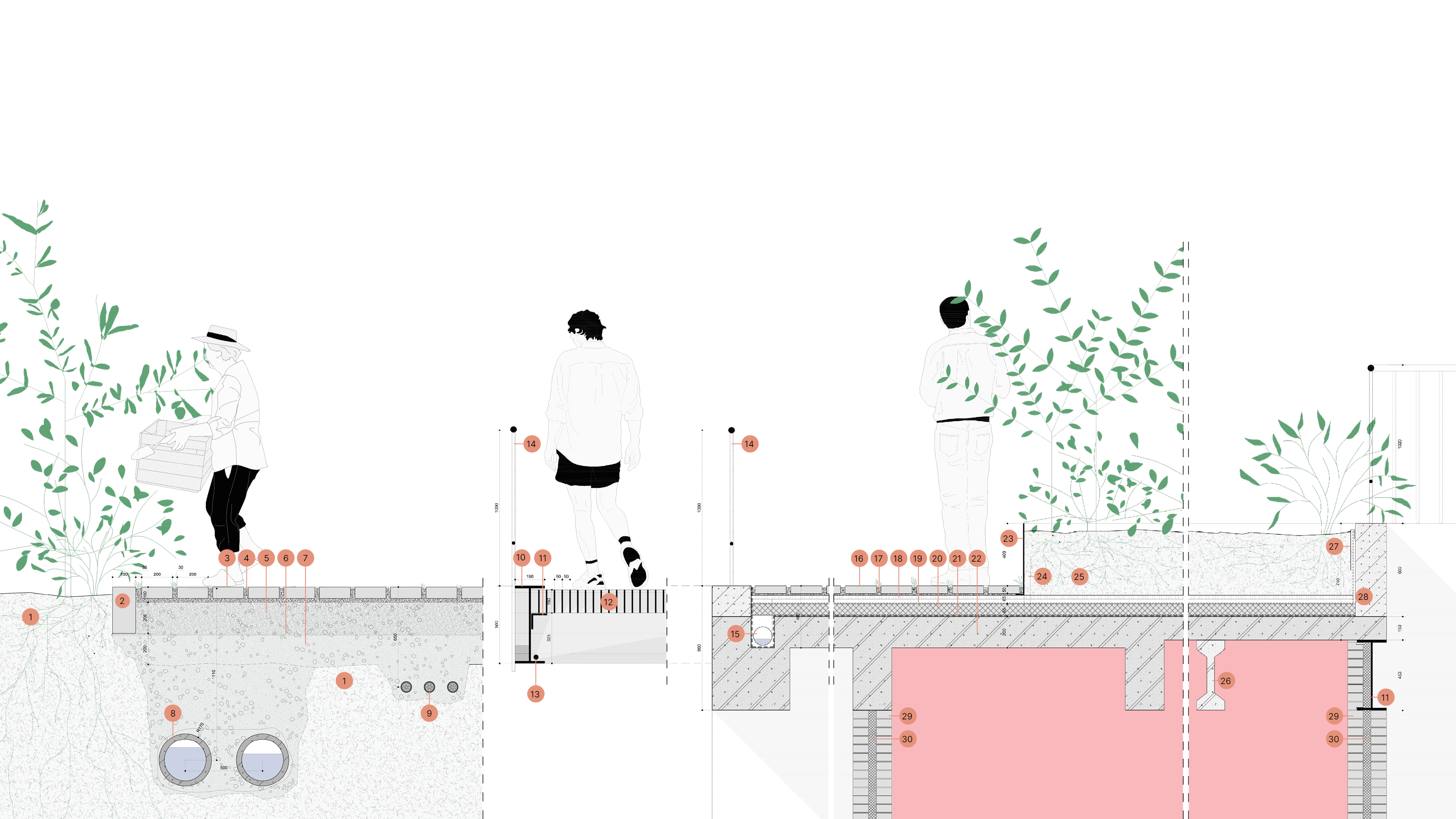
walkway details
- subsoil
- pre-cast divider from reclaimed lijnbaan
tiles cast in concrete 150mm - reclaimed clay tile t: >50mm for communal
spaces’ paving tiles to be stained red/pink - levelling course / crushed sand
- base course / sand. gravel, recycled
construction material 200mm - geogrid with geotextile
- frost protection course 200mm
- district heating pipes r: 170mm at
typical depth 1100mm - electrical pipes at typical depth 650mm
elevated bridge details
- Steel Beam IPE section 500mm
- L steel profile 100/100mm
- steel grille surface 150/50/7mm
- lighting profile to illuminate underside of bridge
- steel balustrade baluster d: 20mm every 150mm
rooftop
details
- existing perforated gutter
- reclaimed ceramic tile t: >50mm
- levelling course / crushed sand
- solid drainage 25mm w. filter mat
- levelling beton cire w. roof seal
- thermal insulation 75mm
- vapour seal
- existing concrete structure
- steel profile 450/50/5mm as soil retainer
- steel supports
- soil 400mm
- existing concrete pre-cast beam
- aluminium profile edge
- pre-cast concrete block
- brick wall
- thermal insulation 50mm